Spain wildfires 2026 dominated Europe’s disaster year. By early August, Spain had already burned more land than in any full year since record-keeping began in earnest — and the summer wasn’t over. Roughly 284,000 hectares gone, 39 fires larger than 500 hectares recorded by August 5 against just 12 at the same point in 2025. Spain’s wildfires became the defining story of a year that also delivered France’s worst fire season since 1949, a June heatwave linked to more than 10,000 excess deaths, and two of Europe’s largest rivers running at levels nobody currently working at a river authority has ever measured.
None of this happened in isolation. The same heat and dryness that drove flame across Iberian hillsides also drained the Danube and the Rhine to their lowest points on record, disrupting everything from Hungarian electricity generation to German chemical-industry shipping. This piece pulls together what actually happened across Europe in 2026 (wildfire, heat, drought, and a separate run of floods that had nothing to do with any of it), with the sourcing behind each figure and each Spain wildfires 2026 statistic explained rather than just cited, because a year like this deserves more than a vague sense that “the weather’s been bad.”
Spain Wildfires 2026: Worst Wildfire Season on Record
Spain’s 2026 wildfire season didn’t build gradually. It arrived as a series of distinct, severe outbreaks that together made this provisionally the country’s most destructive fire year on record, according to coverage compiled by NBC News.
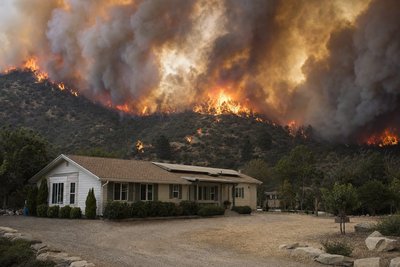
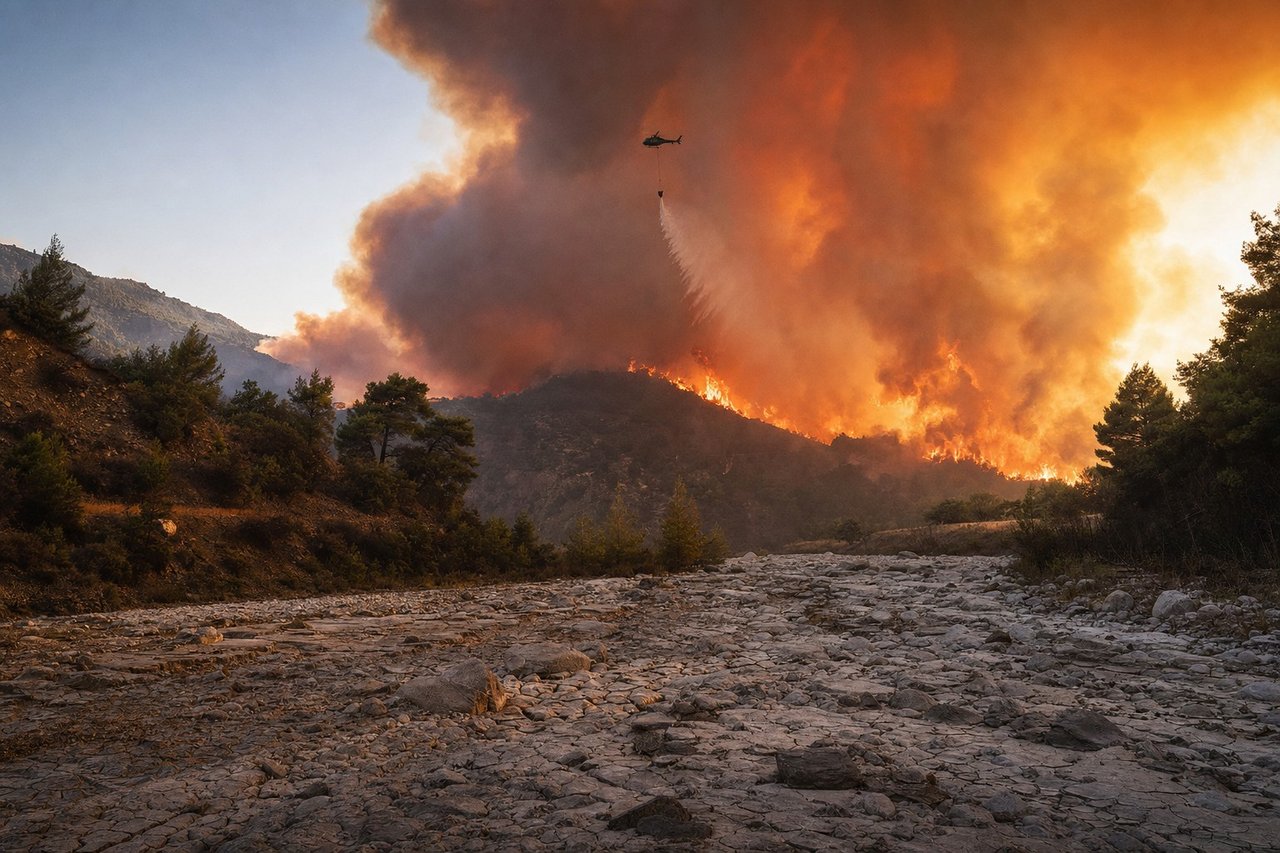
The most consequential single event was a merged fire across the Sierra Oeste region, spanning parts of Madrid, Ávila and Toledo provinces, that burned an estimated 60,000 hectares. It’s provisionally the largest wildfire in Spanish history. The deadliest was different: a fire near Los Gallardos in Almería, which broke out on July 9 and killed 14 people, injured more than 17, and left around 10 people missing, with over 1,600 residents evacuated. It stands as the deadliest wildfire recorded in Andalusia and the third-deadliest in Spain overall, per CNN’s live coverage from late July. A third major fire near Castellón, in the Sierra de Espadán, burned roughly 9,500 hectares before crews stabilized it.
Spanish and international climate scientists at World Weather Attribution later concluded that the compounding conditions behind both France and Spain’s fires (drought stacked on record heat, stacked on dry vegetation) had been made substantially more likely by climate change. That’s a specific, testable finding about atmospheric conditions, not a claim that any one blaze had a single traceable cause.
France, Portugal and Greece Weren’t Far Behind
France’s own fire season reached roughly 115,000 hectares burned, its worst since 1949, with about 3.4 times the typical annual number of individual fires. The largest single event, in Gironde, burned an estimated 40,000 hectares, the second-largest wildfire in France since the Second World War. Evacuations followed at Biscarrosse in the Landes region (more than 3,500 hectares, over 30,000 people moved) and, more unnervingly for a country used to seeing wildfire as a southern problem, at Fontainebleau, where more than 2,000 hectares burned close enough to unsettle a capital that doesn’t usually think about fire risk. NPR reported that more than 300,000 people across France and Spain combined were displaced at various points by new evacuation orders.
A Fire That Made Its Own Weather
One detail from the Gironde fire is worth pausing on even though it’s something of a tangent from the human toll: the blaze generated a pyrocumulonimbus cloud, a fire-triggered thunderstorm complete with its own lightning. It’s the kind of phenomenon meteorologists associate with the very largest North American and Australian megafires, not typically with a French pine forest. Seeing it in Europe at all says something about the scale these fires reached.
Portugal and Greece had their own fights that summer, and it would be easy for a piece focused on Spain and France to leave them out. Portugal battled a roughly 13,000-hectare fire in the north, reported around 80% contained by early July with reinforcement crews arriving from Spain and Italy, per Euronews. Greece saw a fire exceeding 10,000 hectares near Psatha and Porto Germeno in Attica, evacuations on Crete, and a toxic-smoke warning issued for Thessaloniki after a recycling plant caught fire amid the broader conditions. Two firefighters were killed on August 2 when two firefighting helicopters collided near Athens. It’s a reminder that the human cost of a fire season extends well past the people who lose homes.
A Heatwave That Rewrote the Summer
Wildfire and heat aren’t separate stories in 2026; they’re the same story told twice. An unusually early heatwave hit in May, peaking at 40.3°C in Mora, Portugal, on the 27th (10 to 15°C above what’s normal for that date) and spreading discomfort across the UK, France, Ireland, Germany, the Benelux countries and Romania. Then June arrived, and Copernicus, the EU’s climate monitoring service, recorded western Europe’s hottest June on record: an average of 20.74°C, about 3.05°C above the 1991-2020 baseline. The World Meteorological Organization confirmed the EU experienced its hottest single day since 1947 on June 23.
You don’t need a thermometer to feel what a number like that means in a city apartment with no air conditioning. The mortality data bears that out, and it deserves an honest look rather than a single tidy figure. A EuroMOMO-based excess-mortality analysis found more than 10,000 excess deaths across Europe during the June heatwaves, over 9,000 of them among people 65 and older, according to Euronews. A separate analysis using a different methodology (a heat-mortality response function applied to the single worst week, June 22-28) arrived at roughly 20,390 heat-related deaths for that week alone. These aren’t two estimates of the same number; they’re different measurements answering slightly different questions, and stacking them together would overstate the toll. Read side by side, though, they leave little room to describe this heatwave as ordinary.
World Weather Attribution’s scientists went further, concluding the June heat would have been “virtually impossible” without climate change, with roughly 3-4°C of the extreme temperatures directly attributable to warming.
Two of Europe’s Biggest Rivers Are Running Dry
The Danube
The Danube flows through ten countries on its way from southwestern Germany to the Black Sea, and in 2026 much of that course hit levels nobody managing the river today has seen before. The Budapest gauge measured a depth of just 23 centimeters on July 29. In Romania, flow dropped to roughly 2,900 cubic meters per second against a typical August average near 4,600. That shortfall was large enough to expose riverbed rocks, sandbars, and old shipwrecks that are normally underwater. Satellite imagery published by the European Space Agency made the scale visible from orbit.
The drought reached well beyond scenery. Hungary’s Paks nuclear plant, which normally supplies around half the country’s electricity and depends on Danube water for cooling, was running at roughly 10% capacity in August, with most reactors offline. Low flow and elevated water temperature both limit how much cooling water a river-cooled reactor can safely use. Near Vidin, Bulgaria, a Viking river-cruise ship ran aground and had to evacuate around 200 passengers, one of several cruise-line disruptions along the Danube, Rhine and Main that summer.
The Rhine
Germany’s Rhine told a similar story at its own choke point. The Kaub gauge, the shallowest stretch on the river and the one that effectively sets how loaded a barge can be anywhere downstream, fell to its lowest level since records began in 1880. Bloomberg reported it reaching around 6 centimeters in mid-August, a startling number well below the previous record low of 25 centimeters set in October 2018 — startling enough that it’s worth double-checking against your own search before repeating it, though multiple outlets reported it consistently. Barges were operating at an estimated 10 to 20% of normal payload, and Duisburg, Europe’s largest inland port, saw loading capacity fall to roughly a third of normal. The Rhine typically carries about 285 million tonnes of freight a year; companies including Thyssenkrupp, BASF and Lanxess flagged real supply-chain disruption, and France 24 reported forecasts that the crisis could persist into October without sustained rain.
By mid-August, roughly half of Europe’s land area was classified as being in drought, with about 9% at the more severe “alert” level, concentrated across southern Germany, Hungary, Romania, Austria, Czechia and Slovakia, the same belt where both rivers run.
Flooding Struck in Waves, Not One Event
It’s tempting to fold Europe’s 2026 floods into the same drought-and-heat narrative as everything above. That would be a mistake. Flooding this year was several separate, geographically scattered events rather than one continent-wide storm system, and treating them as connected overstates how much the causes actually had in common.
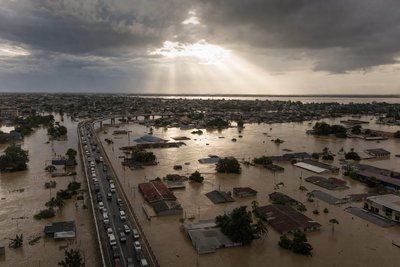
The Balkans took the earliest hit, in the first two weeks of January: flooding across Albania (Durrës, Vlorë, Fier and Lezhë) killed one person and prompted the deployment of more than 500 soldiers, while Kosovo saw evacuations and utility disruption along the Drenica River, per Balkan Insight. At least six deaths were reported region-wide, including a woman and two children in Montenegro and a two-year-old in Serbia, according to AccuWeather. Italy was hit twice in the same year for entirely different reasons: red alerts and rapid river rises in Lazio in January, plus a landslide in Niscemi, Sicily during Storm Harry that forced 1,500 evacuations, and then in August, after weeks of extreme heat, violent storms brought sudden flooding to Liguria, Lombardy and northern Tuscany. The UK’s flooding came earliest and lasted longest: 40 consecutive days of rainfall across Devon, Cornwall and Worcestershire in early 2026, which one report in The Big Issue described as winter rainfall arriving “20 years ahead of predictions.”
What This Means Going Forward, Explained
Whether 2026 turns out to be an outlier or the new normal is exactly the question climate researchers are now trying to answer, and it will take years of data, not one bad summer, to settle it. What’s already measurable is the interconnection: the same heat that drove Spain wildfires 2026’s deadliest season in decades also emptied the Danube, and the river that couldn’t cool a Hungarian nuclear reactor is the same one that stranded a cruise ship near the Bulgarian border. Anyone reading this in a part of Europe that got through 2026 relatively unscathed shouldn’t assume the pattern stops at a border. It didn’t in 2026, and there’s no particular reason to expect it will next time.
Taken together, this is Europe climate disasters 2026 explained as one connected system rather than five unrelated headlines: the drought that primed the wildfires, the heat that emptied the rivers, and the flooding that arrived once the weather pattern finally broke. Europe climate disasters 2026 will likely be studied for years as the summer several separate hazards stopped behaving like separate hazards at all, and Spain wildfires 2026 was simply the story that led the news first.
Frequently Asked Questions
How much land burned in Spain during the 2026 wildfire season?
+
Roughly 284,000 hectares had burned by early August 2026, about 198% above Spain's 20-year average for that point in the season. Spain recorded 39 wildfires larger than 500 hectares by August 5, compared with 12 over the same period in 2025.
What was the deadliest wildfire in Spain in 2026?
+
The fire near Los Gallardos in Almería, which broke out on July 9, killed 14 people and injured more than 17, with around 10 people reported missing and over 1,600 evacuated. It's the deadliest wildfire in the history of Andalusia and the third-deadliest in Spain's recorded history. Separately, a merged fire in the Sierra Oeste area spanning Madrid, Ávila and Toledo burned an estimated 60,000 hectares, provisionally the largest single wildfire ever recorded in Spain.
How did France's 2026 fire season compare to previous years?
+
France burned roughly 115,000 hectares in 2026, its worst fire season since 1949, with about 3.4 times the average number of fires. The Gironde fire alone burned an estimated 40,000 hectares, making it the second-largest wildfire in France since the Second World War.
Did wildfires also affect Portugal and Greece in 2026?
+
Yes. Portugal fought a roughly 13,000-hectare fire in the north that authorities had brought to about 80% containment by early July, with Spain and Italy sending reinforcement crews. Greece dealt with a 10,000-plus-hectare fire near Psatha and Porto Germeno in Attica, evacuations on Crete, and a toxic-smoke warning in Thessaloniki after a recycling plant caught fire; two firefighters died when two firefighting helicopters crashed near Athens in early August.
How hot did Europe's June 2026 heatwave get, and where?
+
An unusually early heatwave in May 2026 peaked at 40.3°C in Mora, Portugal, on May 27, roughly 10-15°C above normal for the date. Western Europe then had its hottest June on record, averaging 20.74°C, about 3.05°C above the 1991-2020 baseline, and the EU recorded its hottest day since 1947 on June 23.
How many people died because of Europe's 2026 heatwaves?
+
Estimates vary by method, and it's worth being upfront about that rather than picking whichever number sounds more dramatic. A EuroMOMO-based excess-mortality tally put deaths during the June heatwaves above 10,000 across Europe, more than 9,000 of them among people over 65. A separate heat-mortality-response-function analysis estimated around 20,390 heat-related deaths for the single week of June 22-28 alone. The two methods measure different things and shouldn't be added together, but both point to a heatwave with a genuinely large human toll.
Why is the Danube River at record-low levels in 2026?
+
A summer of extreme heat and near-absent rainfall left the Danube running far below its normal flow across most of its 10-country course. Romania measured flow around 2,900 cubic meters per second in August against a typical monthly average near 4,600. The Budapest gauge measured just 23 centimeters of depth on July 29, and old shipwrecks and exposed sandbars have surfaced in stretches of the riverbed that are normally submerged.
Is the Rhine drought affecting shipping and industry?
+
Significantly. The Kaub gauge, the Rhine's shallowest choke point in Germany, fell to its lowest level since records began in 1880, reportedly reaching around 6 centimeters in mid-August, well below the previous record low of 25 centimeters set in October 2018. Barges have been operating at roughly 10-20% of normal payload, and companies including Thyssenkrupp, BASF and Lanxess have flagged supply-chain disruption.
Were the 2026 European floods part of one storm system?
+
No, and this is a common misconception worth correcting. 2026's floods were several separate, geographically distinct events rather than one continent-wide storm: the Balkans in January, Italy in both January and August, and the UK in the early part of the year. Treating them as one event overstates how connected the causes actually were, even though several trace back to the same broader pattern of more intense, erratic rainfall.
What happened to Hungary's Paks nuclear plant during the drought?
+
Paks, which normally supplies around half of Hungary's electricity and relies on the Danube for cooling water, was reported running at roughly 10% of capacity in August 2026, with most of its reactors offline. Low river flow and elevated water temperature both reduce how much cooling water a river-cooled plant can safely draw and discharge.
Which parts of Europe were hit hardest by drought in 2026?
+
Roughly half of Europe's land area was in drought by mid-August, with about 9% classified at the more severe 'alert' level, concentrated in southern Germany, Hungary, Romania, Austria, Czechia and Slovakia. The Rhine and Danube basins, both major river-transport corridors, bore the brunt of the economic impact.
Is climate change responsible for Europe's 2026 disasters?
+
Climate scientists at World Weather Attribution concluded that the atmospheric conditions behind France and Spain's 2026 wildfires were made significantly more likely by climate change, and separately found the June heatwave would have been 'virtually impossible' without it, attributing roughly 3-4°C of the extreme heat directly to warming. That's a scientific attribution finding about conditions becoming more likely, not a claim that any single fire or flood was individually caused by climate change.