Extreme Heat & Urban Heat Islands
Extreme heat kills more people in an average year than any other weather hazard, and it does so quietly. There's no dramatic footage, just a slow accumulation of heat-related illness that hits older adults, outdoor workers, and low-canopy neighborhoods hardest. Cities also make their own heat worse: dense asphalt and concrete absorb and re-radiate warmth in a well-documented pattern called the urban heat island effect.
The guides here explain the actual mechanism behind that heat gap, and the mitigation strategies (cool roofing, tree canopy, reflective pavement) that cities are testing at scale, alongside what a household can influence on their own property.
Extreme Heat & Urban Heat Islands guides
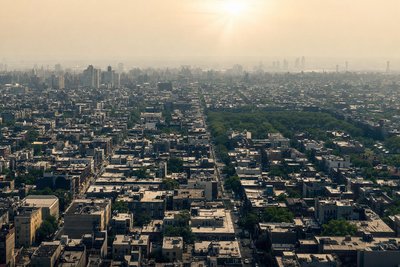
Urban Heat Islands: Why Cities Are Getting Hotter
Why asphalt and concrete trap heat that grass and trees release, how much hotter this makes cities, and the cooling strategies real cities are testing.
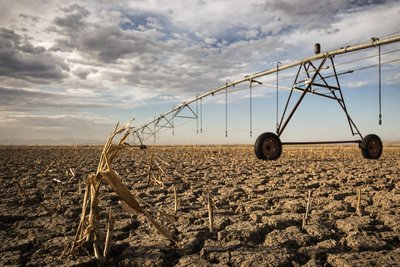
Climate-Resilient Agriculture and Food Security
Drought-resistant crops, precision farming and water management are helping farmers protect food security as climate hazards intensify.
The urban heat island effect isn't uniform across a city. It tracks closely with tree canopy, building density, and surface material. A downtown core with little greenery and dark asphalt can run noticeably hotter after dark than a nearby park or tree-lined residential street, because vegetation cools through shade and evapotranspiration while dark, dense surfaces absorb heat all day and release it slowly overnight. That gap matters most overnight, since bodies under heat stress need a period of cooler temperatures to recover, and heat islands often deny neighborhoods exactly that.
Mitigation strategies fall into a few well-studied categories: reflective ('cool') roofing and pavement that absorb less solar radiation, expanded tree canopy and green infrastructure, and building-level measures like improved insulation and shading. None of these eliminate heat risk on their own, which is why cities that take heat mitigation seriously tend to combine several approaches with early-warning systems and cooling-centre access for the people most exposed.
Heat-response plans typically layer these physical measures with an operational side: activating cooling centres, adjusting outdoor-work rules, and issuing public alerts once forecast conditions cross a defined threshold. The cities that measurably reduce heat-related illness tend to be the ones that treat mitigation and emergency response as a single, coordinated system rather than two separate efforts.
Frequently Asked Questions
Why is the urban heat island effect worse at night than during the day?
+
Dense, dark surfaces like asphalt and concrete absorb solar heat during the day and release it slowly overnight, keeping urban areas warmer after sunset than surrounding vegetated land. This matters because the human body typically needs a period of cooler nighttime temperatures to recover from daytime heat stress.
Does planting more trees actually lower neighborhood temperatures?
+
Yes. Tree canopy cools through both shading and evapotranspiration (moisture release through leaves), and neighborhoods with more mature canopy consistently measure lower surface and air temperatures than comparably dense but sparsely-treed areas nearby.
Who is most at risk during extreme heat events?
+
Older adults, infants, outdoor workers, people with existing cardiovascular or respiratory conditions, and residents of neighborhoods with less tree canopy and more paved surface are all disproportionately affected. Risk is driven by both physiology and where someone lives and works.
What is a cool roof and does it make a measurable difference?
+
A cool roof uses reflective materials or coatings to reflect more sunlight and absorb less heat than a standard dark roof, which can meaningfully reduce indoor temperatures and cooling energy use in the building beneath it, and modestly reduce the surrounding heat-island effect when adopted at scale.