Climate Policy & Infrastructure
Individual and household preparedness only goes so far when the systems around a home, including the power grid, the water system, and the roads, are themselves vulnerable to climate stress. The infrastructure side of resilience is a slower, more institutional story: research funding, smart-city sensor networks, grid-hardening investment, and the policy frameworks that decide who pays for it.
These guides look at that infrastructure layer directly: how cities are using technology to respond to climate hazards in real time, and how climate-adaptation research and funding, including the EU programme this site's name traces back to, actually works.
Climate Policy & Infrastructure guides
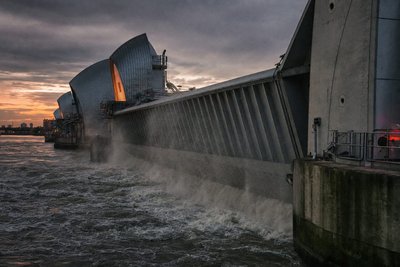
Technologies Enhancing Infrastructure Resilience to Climate Change
How smart sensors, self-healing materials and green infrastructure help cities withstand floods, heatwaves and storms: real examples included.

How Smart Cities Are Addressing Climate Hazards
From Amsterdam's sensor-equipped lampposts to LA's wildfire-prediction analytics: how smart-city tech helps manage flood, fire and heat risk.
Grid hardening covers a wide range of interventions, from undergrounding vulnerable overhead lines and reinforcing transmission towers against extreme wind, to vegetation management around lines in wildfire-prone corridors and adding redundancy so a single failure point doesn't cascade into a wider outage. These projects are typically expensive and slow relative to household-level measures, which is exactly why the funding and governance question (who pays, and on what timeline) ends up mattering as much as the engineering itself.
Smart-city sensor networks add a different layer: real-time monitoring of water levels, air quality, grid load, and structural stress lets cities respond to a developing hazard, closing a flood-prone underpass, triggering a heat-response protocol, or isolating a stressed grid segment, before it becomes a full failure, rather than only reacting afterward. Much of this research traces back to coordinated infrastructure-resilience programmes at the EU level, which brought together universities, meteorological agencies, and infrastructure operators to study exactly these cross-sector vulnerabilities, work this site's guides translate down to a household and community scale.
Progress on this front tends to be uneven across a region, since grid hardening and sensor deployment are typically funded and scheduled asset by asset rather than as a single national rollout. Two neighbouring municipalities can be at very different stages of resilience even when they face similar climate exposure.
Frequently Asked Questions
What does "grid hardening" actually involve?
+
Grid hardening covers physical and operational measures that make the power grid more resistant to climate hazards: undergrounding exposed lines, reinforcing towers against wind, managing vegetation near lines in fire-prone areas, and adding redundancy so a localized failure does not cascade into a wider outage.
Who typically pays for climate-adaptation infrastructure?
+
Funding is usually a mix of public investment (national or regional government budgets), utility ratepayer funding, and, in Europe, coordinated research and infrastructure programmes at the EU level. The split varies significantly by country and by which piece of infrastructure is being upgraded.
What is a smart-city sensor network used for in climate resilience?
+
These networks monitor conditions like water levels, air quality, and grid load in real time, letting city systems respond to an emerging hazard, such as closing a flood-prone road or triggering a heat-response protocol, before it escalates into a full failure, rather than only reacting after the fact.
What was the original EU-CIRCLE research programme?
+
EU-CIRCLE was a coordinated European research programme that brought together universities, meteorological agencies, and infrastructure operators to study how climate hazards affect critical infrastructure like power grids, water systems, and transport networks. This site takes that category of research and translates it down to decisions a household or building owner can act on.