A power outage used to mean a tripped breaker or a branch down on a residential line, the kind of thing a utility crew could usually clear within a few hours. That has changed. Across much of the developed world, outages last longer, affect more people at once, and increasingly happen in weather that used to be rare enough to plan around only loosely.
The reasons sit at the intersection of two slow-moving trends. One is the physical grid itself, much of it built decades ago. The other is the climate it now has to operate in, which looks different from the one its designers had in mind. Neither trend is new by itself. Together, they are forcing utilities and regulators into decisions that used to be mostly theoretical, like whether it is worth burying a line underground, or whether cutting power on purpose is actually the safer option.
Why Power Outages Are Becoming More Frequent
Three pressures are converging on electrical grids at roughly the same time, and none of them is going away on its own.
The first is direct weather stress. Storms with higher wind speeds knock down more lines than the grid’s original design margins anticipated. Extreme heat does double damage: it pushes air-conditioning demand to levels that strain transformers and substations right when those components are already running hotter than normal, and heat itself degrades the physical materials the grid is built from, from sagging transmission cables to insulation that ages faster than expected. In parts of the western United States, dry, windy conditions have become severe enough that utilities now cut power on purpose rather than risk their own equipment starting a fire, which is a form of planned outage that essentially did not exist as a routine practice twenty years ago.
The second pressure is demand. Electrification of heating, cooling, and transportation is adding load to a system that in many places was not built with that growth in mind. A grid segment that comfortably handled a neighborhood’s air conditioners in the 1990s may now also be charging electric vehicles overnight and running heat pumps through winter cold snaps it once handled with gas furnaces.
Aging Infrastructure Meets a Different Climate
The third pressure is simply age. Poles, transformers, and transmission towers installed thirty or forty years ago were engineered against the weather patterns and demand levels of their era. They were not wrong when they were built. The problem is that the assumptions underneath those designs, how many extreme-heat days a year, how strong the worst storm might be, have shifted since then, and physical infrastructure does not update itself. Replacing or upgrading that equipment at scale takes years and a lot of money, which is exactly why so much of the current resilience conversation is about triage: which lines, which substations, which corridors get reinforced first.
What Grid Hardening Actually Means
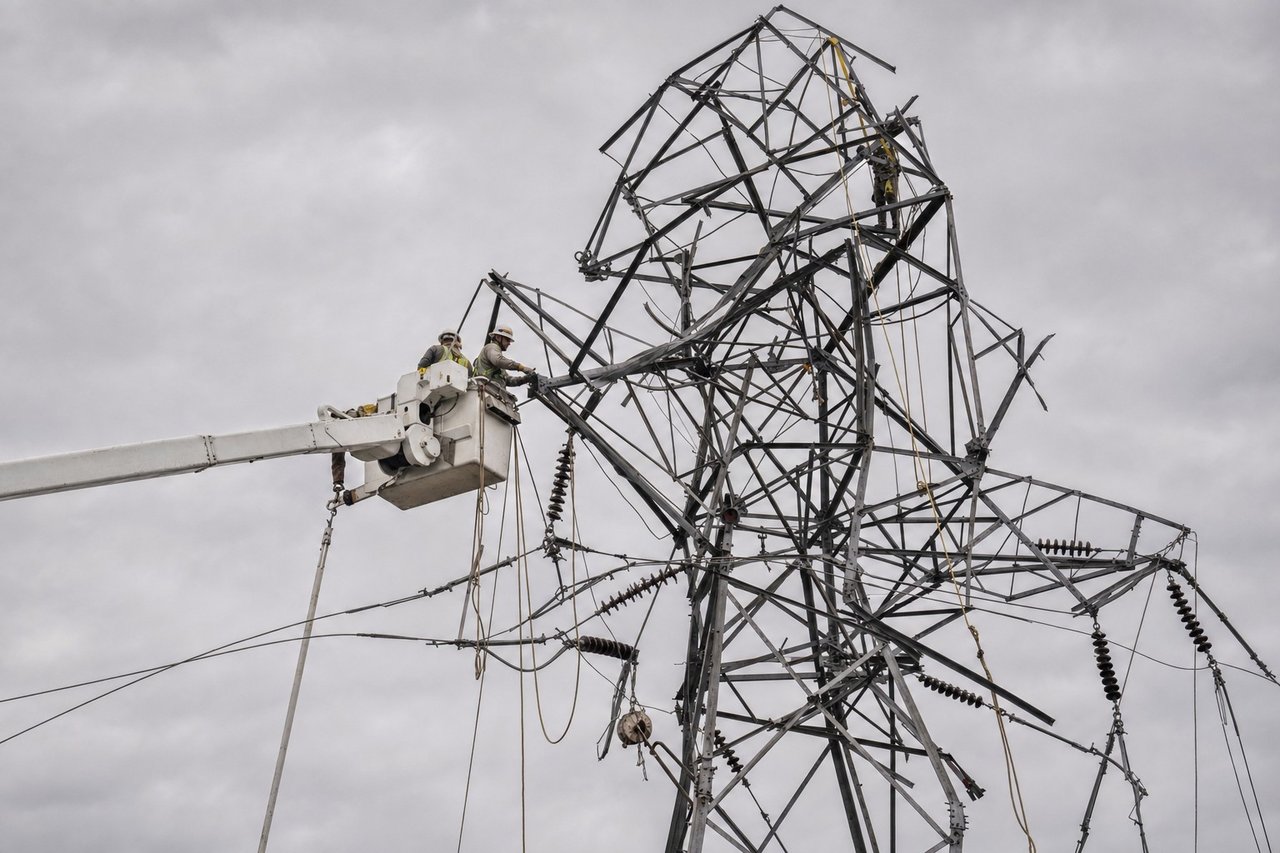
“Grid hardening” sounds abstract, but in practice it is a fairly specific set of physical changes. Utilities replace wooden poles with steel or composite structures that better withstand high wind. They raise substations that sit in flood-prone areas onto higher platforms, since a submerged substation can take a neighborhood offline for weeks rather than hours. They reinforce transmission towers to updated wind-load standards. None of this is glamorous. Most of it is also not visible to the average customer until the day it prevents an outage that would otherwise have happened.
Vegetation Management Does More Than It Gets Credit For
If there’s one grid-hardening measure that matters more than its reputation suggests, it’s vegetation management. Trees and branches contacting power lines are one of the single largest causes of outages in forested and suburban areas, and in dry climates that contact has also been the ignition point for some of the most destructive wildfires on record. A utility that runs a disciplined clearance program, trimming and removing vegetation near lines on a regular cycle rather than reactively after storms, tends to see a real, measurable drop in weather-related outages. It’s not exciting work. It’s also one of the more cost-effective resilience investments a utility can make, because it reduces both routine outage frequency and catastrophic fire risk with the same crews and the same budget line.
Undergrounding Power Lines: A Trade-off, Not a Fix
Burying power lines underground removes them from the two things that damage overhead lines most: wind and falling trees. Underground lines are dramatically less likely to fail during a storm, which is why utilities in wildfire-prone and hurricane-prone regions have been converting sections of their highest-risk overhead corridors to underground.
The trade-off is real and it is not small. Undergrounding costs several times more per mile than stringing overhead lines, and it takes much longer to build, particularly in already-developed areas where crews have to dig through existing roads, sidewalks, and other buried utilities. That combination of cost and pace means undergrounding an entire regional network isn’t realistic on any near-term timeline. What utilities actually do is prioritize: they target the highest fire-risk or storm-exposed corridors first, and accept that most of the grid will stay overhead for the foreseeable future. It’s worth noting that this isn’t a uniquely American problem to solve from scratch. Several European countries buried a far larger share of their distribution network decades ago, partly for reasons unrelated to storm resilience, which is one reason their outage patterns look different from grids that are still mostly overhead.
Microgrids: When Part of the Grid Can Stand Alone
A microgrid is a self-contained slice of the electrical system, often serving a single campus, hospital complex, or neighborhood, built with its own generation and storage and the ability to disconnect from the main grid during an outage and keep running independently. The technical term for that disconnection is islanding, and it’s the feature that actually matters: when the surrounding grid goes down, a properly configured microgrid site does not.
Princeton University’s microgrid kept the campus powered through Hurricane Sandy in 2012 while much of the surrounding New Jersey grid went dark for days. The University of California, San Diego runs one of the most closely studied microgrids in the country, generating a substantial share of its own power on campus and using that capability specifically to maintain critical research and hospital operations during regional outages. Hospitals and universities remain the most common adopters, mostly because they combine two things a lot of other sites don’t have together: a hard requirement for continuous power and the budget to build for it. Municipal and community-scale microgrids are a newer and smaller category, aimed less at institutional continuity and more at keeping essential neighborhood services, water pumps, emergency shelters, and communications running when the wider grid can’t.
Public Safety Power Shutoffs: Cutting Power on Purpose
Not every outage is accidental. Public safety power shutoffs are a deliberate utility practice, most associated with California utilities operating in high fire-risk terrain, where power is cut to a section of the network ahead of forecasted dangerous conditions, typically strong, dry wind. The logic is straightforward: a downed or arcing line in those conditions can ignite a fire that spreads faster than crews can respond to, so cutting power removes that ignition source before it becomes one.
The trade-off is just as real as the one behind undergrounding. A planned shutoff can leave tens of thousands of households without power for a day or more, sometimes affecting people with medical equipment that depends on electricity, and the disruption falls on people who weren’t given much choice in the decision. Utilities that lean on shutoffs too often draw real criticism for using them as a blunt substitute for the harder, slower work of hardening their equipment. Used well, alongside grid hardening rather than instead of it, the practice has measurably reduced utility-caused ignitions in some of the highest-risk service areas. Used as the default answer to every windy day, it just shifts the burden from fire risk onto outage risk without actually fixing anything.
Who Actually Pays for Grid Resilience Upgrades
Grid hardening, undergrounding, and microgrid infrastructure all cost money, and in most regulated electricity markets, that cost eventually lands on customer bills. Utilities typically bring resilience spending plans to a regulator through a process usually called a rate case, where the proposed investment is reviewed, sometimes trimmed, and approved for gradual recovery through rates over a period of years rather than all at once. That process is slow by design. It exists to stop utilities from passing through unnecessary costs, but it also means resilience upgrades that are approved today might not be fully reflected in customer rates, or fully built, for years afterward.
That lag is one of the less-discussed reasons grid resilience is hard to fix quickly even when everyone agrees on the plan. A utility can identify exactly which corridor needs undergrounding and exactly which substation needs to move above flood level, and still spend several regulatory cycles getting the funding structure approved before a single crew shows up. The equipment sitting in the ground right now was mostly built for a climate that no longer exists, and the process for replacing it is built for a pace that assumes it still does.
Frequently Asked Questions
Why are power outages becoming more common?
+
Grids are facing more frequent and more intense weather events, from storms and high winds to heat waves that push demand past what equipment was designed to carry. At the same time, a lot of transmission and distribution infrastructure was built decades ago for a different climate and a smaller population, so it has less margin to absorb the added stress.
What does grid hardening actually mean?
+
Grid hardening covers a set of physical upgrades that make infrastructure more resistant to weather: stronger poles and support structures, elevated substations in flood-prone areas, and more aggressive vegetation clearance near power lines. It's less about new technology and more about rebuilding existing infrastructure to a higher physical standard.
What is a microgrid?
+
A microgrid is a self-contained section of the electrical grid, often serving a single campus, hospital, or neighborhood, that can disconnect from the main grid during an outage and keep running on its own generation and storage. This is usually called 'islanding.' Universities and hospitals have been early adopters because they need power continuity for critical operations.
Why don't utilities just bury all their power lines underground?
+
Underground lines are far less likely to fail from wind, falling trees, or ice, but installing them costs several times more than overhead lines and takes much longer to build, especially in already-developed areas with existing roads and utilities underground. Utilities tend to prioritize undergrounding in the highest-risk corridors first rather than converting entire networks at once.
How much does vegetation management actually affect outage rates?
+
Trees and branches falling on or growing into power lines are one of the most common causes of outages, and in dry regions, contact between vegetation and equipment has also triggered some of the most damaging wildfires on record. Utilities that run consistent clearance programs along their lines tend to see meaningfully fewer weather-related outages than those that don't.
What is a public safety power shutoff?
+
A public safety power shutoff is when a utility deliberately cuts power to a section of its network during extreme fire-risk conditions, usually high wind combined with dry vegetation, to prevent its own equipment from sparking a wildfire. The practice is most associated with utilities in the western United States, where it has prevented ignitions but also drawn criticism for the outages it causes.
Who pays for grid resilience upgrades?
+
In most regulated electricity markets, utilities propose infrastructure spending to a regulator, sometimes called a rate case, which reviews the plan and decides how much of the cost can be recovered through customer rates and over what period. That means resilience investments are usually paid for gradually, through electricity bills, rather than as a one-time charge.
Do microgrids only make sense for large institutions?
+
Large campuses were the early adopters because they had both the budget and a clear critical-operations case, but smaller municipal and community microgrids are increasingly being built specifically to keep essential services running during extended outages. The economics are still more favorable at scale, which is why hospitals and universities remain the most common examples.
Does aging infrastructure alone explain the rise in outages?
+
No. Age is a factor, but the bigger issue is a mismatch between when infrastructure was designed and the conditions it now operates under, including higher peak demand from cooling and electrification and more frequent extreme-weather events than the original engineering assumed.
Are undergrounding and microgrids competing solutions?
+
Not really. They address different problems: undergrounding reduces the chance that a line fails in the first place, while a microgrid keeps a specific site running even if the wider grid does go down. Utilities and large facilities often pursue both, targeting undergrounding at known failure-prone corridors and microgrids at sites where continuous power matters most.