Wildfire Preparedness & Resilience
Wildfire used to be mostly a wilderness problem. It isn't anymore: decades of new construction pushing into fire-prone terrain, combined with longer, more intense fire seasons in many regions, have turned the wildland-urban interface into the place where most home losses now happen. The good news is that a lot of that risk is genuinely manageable at the individual-property level, not just something a fire department fights on your behalf.
AI-generated image
The guides below focus on the two things that actually change outcomes: defensible space (the cleared, managed zones immediately around a structure) and home-hardening (the materials and construction details, including roofing class, ember-resistant vents, and decking, that decide whether embers landing on a house start a fire or just burn out). Both are things a homeowner can act on well before fire season starts.
Wildfire Preparedness & Resilience guides
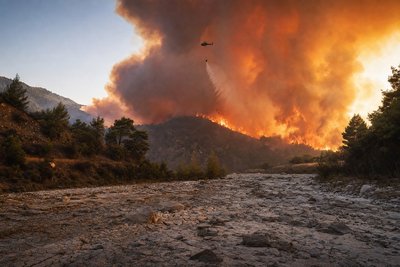
Spain Wildfires and Europe's Climate Disasters in 2026: Fires, Heat and a Historic Drought
Spain and France's worst wildfire seasons, a heatwave tied to thousands of deaths, and the Danube and Rhine at record lows: Europe's 2026 climate year, mapped.
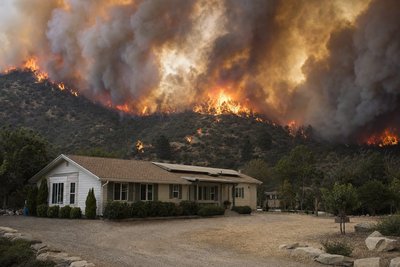
Wildfire Preparedness: Protecting Homes & Communities
Defensible-space zones, ember-resistant vents, and roofing class: a practical wildfire preparedness guide for homeowners in the wildland-urban interface.
Most homes that burn in a wildfire aren't hit by a wall of flame moving through. They're ignited by embers, which can travel well over a kilometre ahead of a fire front and land on or near a structure long before the main fire arrives. That's why defensible space matters as much as, or more than, distance from the nearest tree line: an ember landing on a mulch bed against a wooden fence, or collecting in a clogged gutter, is often what actually starts a home fire, not direct flame contact.
Defensible space is usually described in zones radiating out from a structure: an immediate zone within a few metres kept clear of anything combustible, a middle zone with spaced and maintained vegetation, and an outer zone managed to reduce fuel continuity. None of it requires turning a property into bare dirt; it's about breaking up the fuel path so fire has nowhere continuous to travel. Home-hardening does the complementary job at the building itself: Class A roofing, ember-resistant vent screens, and non-combustible decking materials close off the specific entry points embers exploit.
Frequently Asked Questions
How far from my house should defensible space extend?
+
Guidance varies by region and local fire risk, but most defensible-space frameworks describe zones out to roughly 30 metres from a structure, with the strictest clearance requirements in the first few metres immediately around the building. Check your local fire authority for the exact zone widths and rules that apply where you live.
Can embers really ignite a house that never touches the fire itself?
+
Yes. Ember (or firebrand) ignition is one of the leading causes of home loss in wildland-urban interface fires. Wind-blown embers can travel well ahead of a fire front and ignite vulnerable points on a structure, like roof valves, vents, or debris in gutters, even when the main fire never reaches the property line.
Is defensible space or home-hardening more important?
+
They work together rather than substituting for one another. Defensible space reduces the chance a fire or ember reaches the structure with enough intensity to ignite it; home-hardening reduces the chance that an ember that does arrive actually catches. Properties that do only one tend to remain significantly more vulnerable than those that do both.
Does insurance affect how wildfire risk is assessed on a property?
+
In many wildfire-prone regions, insurers increasingly factor defensible space and home-hardening measures into underwriting and pricing, and some require a defensible-space inspection to maintain coverage. Requirements vary by insurer and region, so it is worth checking directly with your provider.