The lights go out, and the first instinct is usually to wait it out. That works fine for the outages most people remember: the kind that last twenty minutes and end before anyone finishes complaining about it. It works much less well for the outages that are becoming more common, the ones tied to a heatwave straining the grid or a storm that’s taken down lines across an entire region, where a household can go a day, two days, or longer without knowing exactly when service comes back.
This guide covers what to have in place at home before an outage starts, what actually keeps food and medication safe once it does, and the point at which staying home stops being the right call. None of it requires a generator on the driveway or a bunker in the basement. Most of it is a short list of unglamorous supplies and a few decisions made calmly in advance, rather than worked out for the first time in the dark.
Why outages are lasting longer than they used to
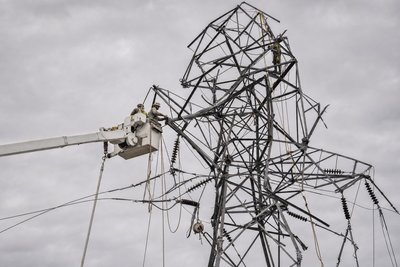
Aging infrastructure is part of the story, but it’s not the whole story. A grid built decades ago for a smaller, more predictable load is now carrying more demand, more often, during exactly the weather events most likely to damage it: heatwaves that push air conditioning load past what transformers were designed for, storms with heavier rainfall and stronger winds than the historical baseline the system was engineered around. Utilities are investing in hardening lines and substations against this, but that work happens gradually, transformer by transformer and mile by mile, while the weather doesn’t wait for the upgrade schedule.
The practical effect for a household is less about any single outage being catastrophic and more about the odds shifting. An outage that might once have meant a few hours without power increasingly has a real chance of stretching into a full day or more, particularly for anyone on the outer edges of a utility’s service area where repair crews arrive last.
This matters for how a household prepares, not just for how a utility invests. A plan built around “the power always comes back within an hour or two” quietly stops making sense once outages of a day or more become a realistic scenario rather than a rare exception. The supplies and decisions below are built for that longer, less predictable window, on top of whatever general emergency kit a household already keeps for evacuations.
Before it happens: what to keep on hand at home
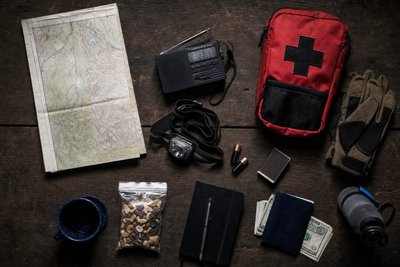
A lot of general emergency-kit advice is built around evacuation, and while some of it overlaps here, sheltering at home through an outage has its own specific list. The goal isn’t a bag by the door. It’s a household that can function normally-ish for a day or two without mains power.
- A battery bank or small solar charger, kept charged as an ongoing habit, not something you remember to plug in once the lights already went out
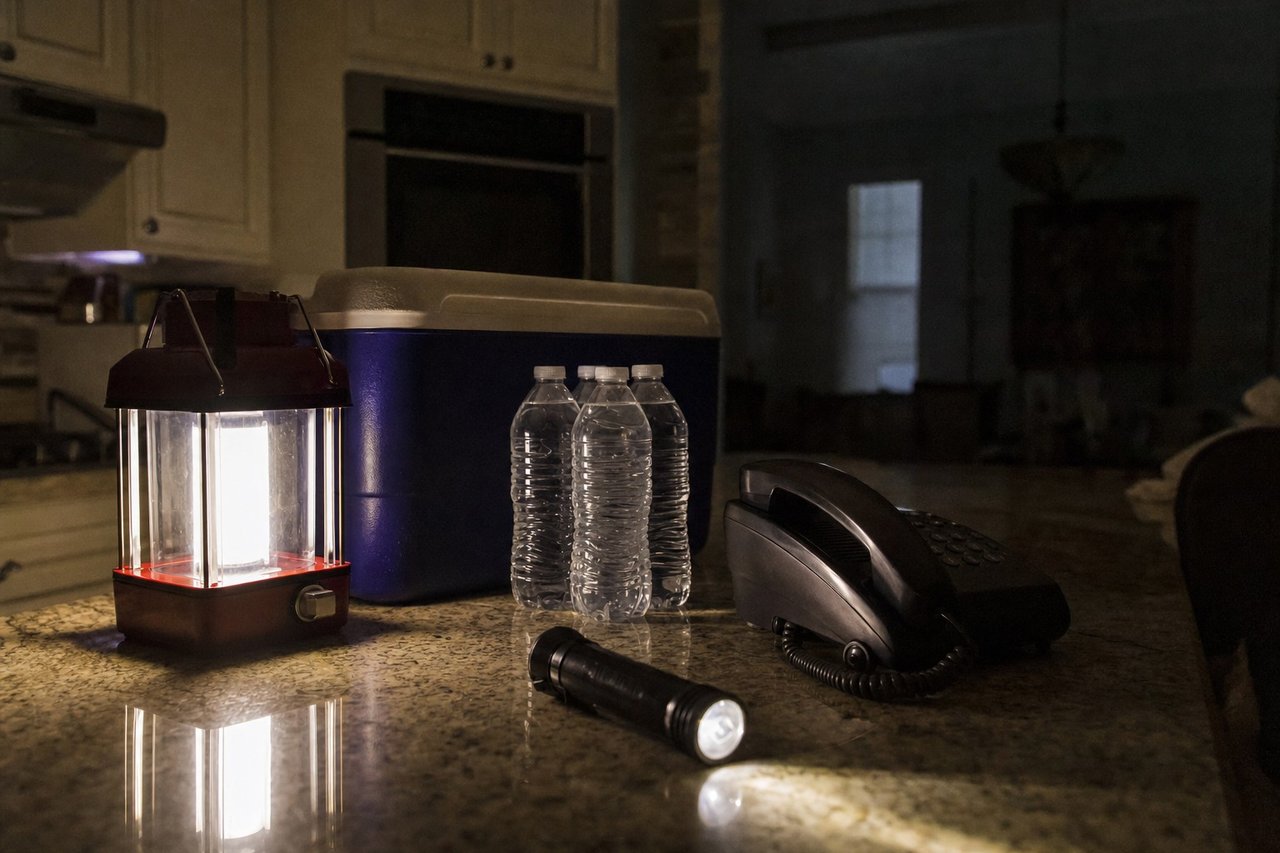
- Flashlights, headlamps, or battery/LED lanterns for every room likely to be used after dark, plus spare batteries stored with them
- A manual can opener, which sounds trivial until the only can opener in the house is the electric one on the counter
- One or two coolers, plus a bag or two of ice kept in the freezer specifically for this purpose rather than for drinks
- A corded (not cordless) landline phone, if the household still has a phone line, since it often keeps working when the cordless handsets and the mobile network both struggle
- A battery or hand-crank radio for weather and utility updates if mobile data becomes unreliable
- A few days of water and shelf-stable food that doesn’t need cooking, in case the outage overlaps with a gas or electric stove being unusable
Skip the candles. They feel appropriately old-fashioned for a power outage, but they’re also a documented cause of house fires during outages, particularly with kids or pets moving through unfamiliar dark rooms. A five-dollar LED lantern does the same job without the open flame.
A cordless landline handset deserves a specific mention here because it’s an easy thing to overlook until the outage is already underway. The base station it sits on needs mains power to work, so a cordless phone goes silent along with everything else in the house, even though it looks like a phone that should still function. A basic corded model, plugged directly into the wall jack, is worth keeping in a drawer somewhere in the house even if the household mostly uses mobiles day to day, since the phone company’s own line power can keep it working when the local electric grid can’t.
Food safety during the outage: the two numbers that matter
Two figures from USDA food-safety guidance are worth memorizing, because they turn “should I throw this out?” from a guess into a simple check. A closed refrigerator keeps food at a safe temperature for about four hours. A full freezer holds safe temperatures for roughly 48 hours if the door stays shut; a half-full freezer, closer to 24.
Both numbers depend entirely on the door staying closed. Every time someone opens the fridge “just to grab one thing,” the clock resets a little in the wrong direction. If an outage looks likely in advance, a practical move is to set the fridge and freezer to their coldest settings a day ahead, and to freeze water in clean jugs to pack around perishables in a cooler if the outage runs long. Once both windows pass, treat perishable food as unsafe and get rid of it. Spoiled food doesn’t reliably announce itself through smell or appearance, so the rule of thumb among food-safety agencies is blunt for a reason: when in doubt, throw it out.
Medical needs: medication, equipment, and utility registration
For anyone managing a health condition, a power outage adds a layer most general prep advice skips entirely.
Refrigerated medication, insulin being the most common example, should move into its own small cooler with ice packs as soon as an outage starts, kept separate from the food cooler so it isn’t opened every time someone looks for a snack. Manufacturers publish specific guidance on how long a given medication tolerates being above refrigeration temperature, and a pharmacist can walk through it for anything currently prescribed in the household.
Powered medical equipment, oxygen concentrators and similar devices among them, needs its own battery-backup plan worked out with the supplier ahead of time, including a realistic sense of how many hours a backup battery actually covers under real use.
It’s also worth calling the utility directly and asking about a medical-priority or “critical care” customer program. Many utilities maintain a registration category for households with a documented medical need for continuous power, which can mean earlier restoration priority or advance notice ahead of planned outages. What the program actually guarantees, and what paperwork it requires, varies by utility, so the only reliable way to find out is to call and ask, not to assume.
None of this works well as a decision made mid-outage. A pharmacist consulted calmly in January about how a specific insulin behaves outside the fridge is far more useful than the same question asked at 11pm during a heatwave blackout, and a utility’s medical-priority form is easier to track down on a normal afternoon than during the outage it’s meant to help with.
Generator safety: the one rule that isn’t negotiable
If a household owns a portable generator, one rule overrides every other consideration: never run it indoors, in a garage even with the door open, or near a window, vent, or door where exhaust can drift back inside. No exceptions. Portable generators produce carbon monoxide, a gas with no color and no smell that can incapacitate a person before they notice anything wrong. The CDC’s guidance is to run a generator at least 20 feet from the home, with the exhaust directed away from any opening, and to install carbon monoxide alarms in the home regardless. This isn’t a point to hedge on or weigh against convenience. People die from generator-related carbon monoxide poisoning during outages every storm season, almost always because the generator was run somewhere that felt “close enough to outside” but wasn’t.
When the outage runs long: what changes past the food-safety windows
Once both the four-hour refrigerator window and the roughly 48-hour freezer window have passed, the calculation shifts from “wait it out” to “manage the loss and reassess the situation.” Discard perishable food rather than testing it by smell. Check in on anyone in the household, or nearby, who depends on medication timing or powered equipment, since this is usually the point where a battery backup or a cooler ice supply is also running low.
This is also the point to seriously consider whether staying home is still the right call. If indoor temperature becomes dangerous in either direction, if a medical need can no longer be met safely at home, or if there’s simply no restoration estimate and the outage is well past 72 hours, a cooling or warming center, a relative’s home with power, or a hotel are all reasonable places to go rather than places to avoid out of stubbornness. Leaving a day earlier than strictly necessary rarely causes regret. Waiting too long, particularly with a young child, an older adult, or a health condition in the house, sometimes does.
A battery-powered radio or a charged phone with a downloaded list of local cooling and warming center addresses, saved before the outage rather than searched for during it, removes one more decision from a moment when decisions are harder to make well.
Frequently Asked Questions
How long does food stay safe in the refrigerator during a power outage?
+
About four hours, provided the door stays closed. Every time the door opens, cold air escapes and the safe window shrinks, so the real number depends more on how disciplined the household is about opening it than on the fridge itself. After four hours without power, perishables like meat, dairy, and leftovers should be treated as suspect.
How long does a full freezer stay safe without power?
+
Roughly 48 hours if it's full and the door stays shut, or about 24 hours if it's half full. A full freezer holds cold longer because the frozen items themselves act as thermal mass. If you know an outage is coming, freezing water in jugs ahead of time buys extra hours.
Should I use flashlights or candles during a power outage?
+
Flashlights, headlamps, or battery lanterns, not candles. Open flames are a leading cause of house fires during outages, especially when children, pets, or unfamiliar rooms are involved and someone knocks a candle over in the dark. LED lanterns are cheap enough now that there's little reason to reach for a match.
Can I run a generator inside my house or garage during an outage?
+
No. Never run a portable generator indoors, in a garage (even with the door open), or near an open window. Portable generators produce carbon monoxide, a colorless, odorless gas that can incapacitate and kill within minutes at high concentrations. The CDC recommends running a generator at least 20 feet from any door, window, or vent, with the exhaust pointed away from the home.
What should I do about medication that needs refrigeration, like insulin?
+
Move it into a cooler with ice packs as soon as the outage starts rather than waiting to see how long the fridge holds. Most insulin tolerates brief periods above refrigeration temperature, but manufacturers publish specific guidance for each product, and a pharmacist can confirm the safe window for a given medication. A small dedicated cooler for medication, kept separate from the food cooler, avoids the temptation to keep opening it.
What if someone in the household depends on powered medical equipment?
+
Contact the equipment supplier or your utility before an outage happens, not during one, to ask about battery backup options and typical run times. Many utilities offer a medical-priority or 'critical care' customer registration that flags the account for earlier restoration and, in some cases, advance outage notifications. Registration requirements and what the designation actually guarantees vary by utility, so it's worth calling to ask directly rather than assuming.
How do I know if my utility has a medical-priority customer program?
+
Call the customer service number on a recent bill and ask specifically about medical baseline, critical care, or medical-priority status. Some utilities require a form signed by a physician; others just need a phone call. It costs nothing to ask, and the answer is worth knowing well before the household actually needs it.
Is a landline phone worth keeping during a power outage?
+
A corded landline phone, specifically, yes. Cordless landline handsets have a base station that needs mains power, so they die along with everything else. A basic corded phone plugged directly into the wall jack often keeps working because the phone company's own equipment supplies a small amount of power down the line, independent of the local electric grid.
What should I do if the power outage lasts longer than the food-safety windows?
+
Once the four-hour refrigerator window and the roughly 48-hour freezer window have both passed, assume any perishable food inside is unsafe and discard it, even if it looks and smells fine. 'When in doubt, throw it out' exists because some of the bacteria that grow on spoiled food don't change the taste or smell before making someone sick.
When should a household consider leaving home during an extended outage?
+
When indoor temperatures become dangerous (either direction), when medical equipment or medication needs can no longer be met at home, or when the outage stretches well past 72 hours with no clear restoration estimate. A cooling or warming center, a relative's home with power, or a hotel are all reasonable options, and leaving earlier rather than later is usually the safer call for anyone with a young child, an older adult, or a health condition in the household.
Do I need a whole-house generator, or is a portable one enough?
+
Most households get by with a portable generator sized for a few essential circuits: a refrigerator, some lighting, and a phone charger. A whole-house standby generator is a larger investment that automatically kicks in and covers the entire home, which makes more sense for households in areas with frequent multi-day outages or someone with equipment that truly cannot go without power. The right size depends entirely on that household's own circuits and habits, so there's no single number that fits everyone.
What's the single most useful thing to have ready before an outage, if I can only prepare one thing?
+
A charged battery bank or power station, kept topped up as a habit rather than an afterthought. It covers phone charging, small lighting, and in some cases a medical device, and unlike food or water it has no expiry date to track, just a charge level to check every few months.