Search “emergency go-bag checklist” and you’ll get the same laminated list everywhere: water, flashlight, radio, first-aid kit. It’s not wrong. It’s just incomplete. Real evacuations happen at 2am, in the rain, with kids who need to be woken up and pets who need to be found. The bag that actually gets used is organised around who grabs what, not a copy-pasted inventory lifted from another site.
This guide breaks the go-bag down by category and by household role, so the plan survives contact with an actual emergency, whether that’s a wildfire evacuation order, a flash flood, or a multi-day power outage.
Why generic checklists fail in practice
Most go-bag lists are written for a single adult living alone. They don’t account for the coordination problem every household actually faces: who is responsible for the bag, where it lives, and how it gets updated. A go-bag that sits untouched in a closet for three years is worse than no bag at all: the batteries are dead, the documents are outdated, and nobody remembers what’s inside or whether the food has expired.
There’s also a planning gap most lists never address: they assume one clean scenario. A single adult grabbing a bag and walking to a shelter is a very different situation from a family of five, two of them under age six, coordinating a car evacuation at night with a dog that hates its carrier. The list doesn’t change much between those two households. The plan absolutely does.
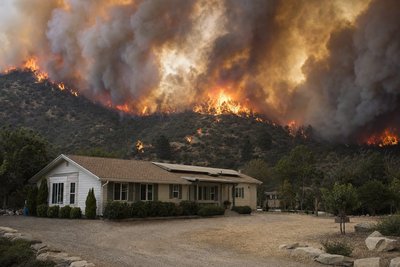
If evacuation orders come with fifteen minutes’ notice (common in fast-moving wildfires), a go-bag needs to already be packed and sitting by the door. Nothing in a good plan should require assembly during an active emergency; assembly happens now, calmly, while the smoke is still theoretical.
The core go bag kit: what goes in every bag
These items apply regardless of hazard type: wildfire, flood, storm, or grid failure. Think of this as the base layer everything else builds on.
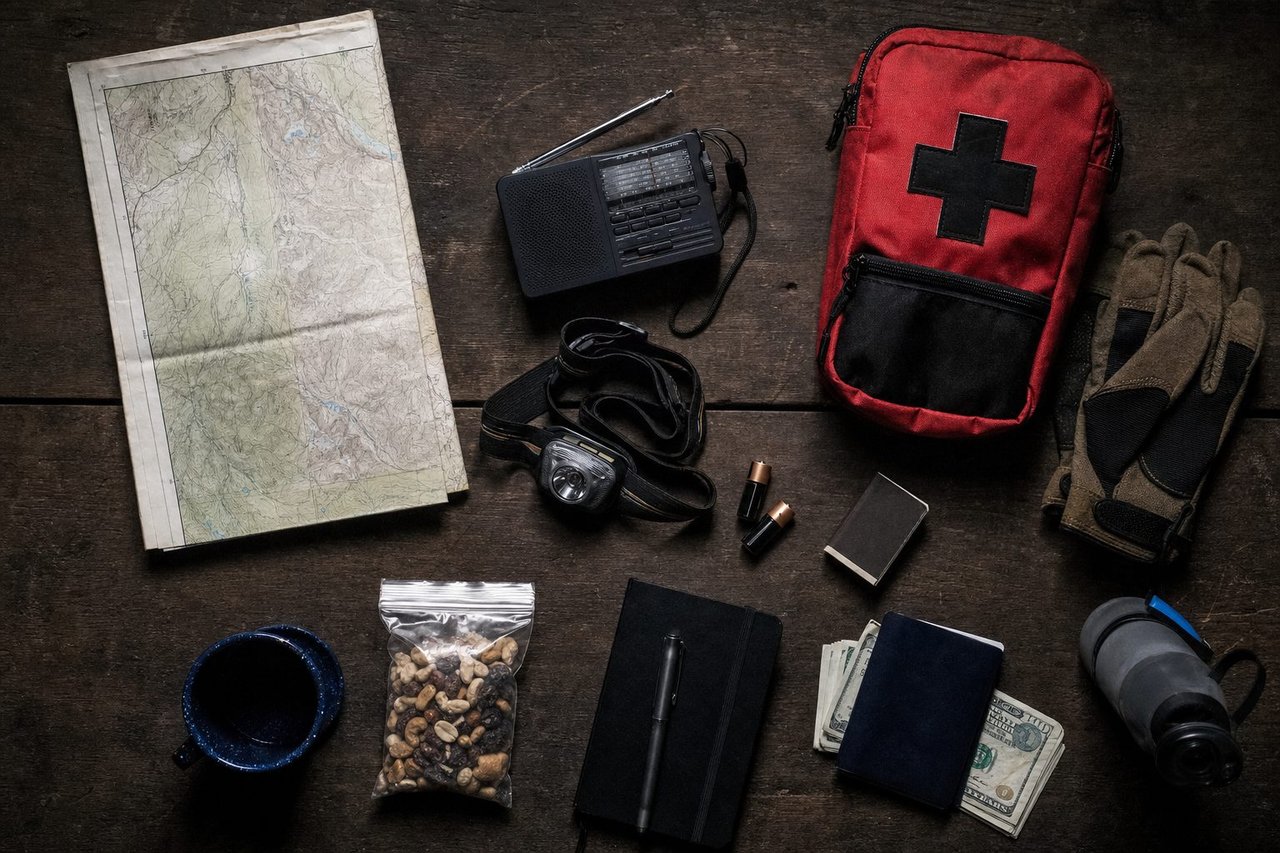
Core kit checklist
None of this is exotic or expensive. Most households already own half of it. The failure mode isn’t lack of access to gear. It’s never consolidating what’s already in the house into one bag by the door.
Hazard-specific additions
Layer these on top of the core kit depending on what your region actually faces. A household in coastal Florida and a household in the California foothills should not pack identically.
Wildfire evacuation
N95 masks for smoke, a change of long-sleeve natural-fibre clothing (synthetics melt onto skin), and goggles. Keep the car’s fuel tank never below half during fire season. Fuel stations near evacuation routes empty first, and you do not want to be deciding between a gas station queue and an evacuation order.
Flood or coastal storm
Dry bags or waterproof liners for electronics and documents, a whistle for signalling, and water-purification tablets rated for potentially contaminated flood water, not just backcountry use. Floodwater carries sewage and chemical runoff that ordinary hiking purification tablets aren’t tested against.
Extended power outage
A larger battery bank or small solar charger, a written list of any medications that require refrigeration along with a plan for keeping them cool, and a paper map. Mobile networks and GPS are often among the first services to fail, and a phone with a dead battery is a phone that can’t navigate anyway.
“The bag people actually use is the one they’ve opened before, not the one they assembled once and hoped to never touch.” — Common guidance among emergency management trainers
Organising by household role, not just by item
For households with more than one person, assign categories rather than duplicating effort across everyone’s individual bags. This turns “did someone pack the passports?” into a known, owned task.
- Documents & finances: one adult owns the waterproof document pouch and the cash reserve, and checks it twice a year.
- Medical: whoever manages prescriptions keeps the medication list current and checks expiry dates on both medication and any medical supplies.
- Kids & pets: a separate small bag per dependent, with a comfort item, spare clothes, any pet food, and a leash or carrier kept by the door, not in a hall cupboard three rooms away.
- Tech & communication: chargers, the radio, and a written (not just digital) list of emergency contacts, since a dead phone shouldn’t mean losing every phone number you know.
Splitting ownership this way also builds in redundancy: if one adult isn’t home when an order comes, the rest of the household still knows where everything is, because it was never one person’s private system.
Building the kit in stages, without overspending
A fully-stocked go-bag can look like a few hundred dollars of gear laid out on a table, which is exactly the kind of upfront cost that makes people put off starting at all. In practice, almost none of it needs to happen at once. A reasonable staged approach:
- Month one: consolidate what you already own (a spare charger, a working flashlight, any shelf-stable food already in the pantry) into one bag.
- Month two: add water storage and a battery or hand-crank radio.
- Month three: add the first-aid kit, document copies, and cash reserve.
- Month four onward: layer in the hazard-specific items relevant to your region.
Buying nothing is common; buying everything in one sitting is rare and usually doesn’t happen. Staging the purchase removes the excuse that a go-bag is a big-ticket project rather than a series of small ones.
Special considerations for infants, older adults, and pets
Standard checklists tend to assume a household of able-bodied adults, which leaves real gaps for anyone outside that assumption. Infants need formula or food sized for 72 hours, a stock of diapers, and a comfort item that won’t be found anywhere near a shelter at 3am. Older adults or anyone with mobility limitations should have a written summary of medical conditions and any equipment (a cane, a walker, hearing-aid batteries) that can’t be quickly replaced if left behind. Pets need their own small kit: food, a leash or carrier, and proof of vaccination, since many emergency shelters require it before they’ll accept an animal at all.
Common mistakes that quietly undermine a go-bag
A few patterns show up again and again in households that thought they were prepared and found out otherwise.
The first is treating the bag as a purchase rather than a system. Buying every item on a checklist in one afternoon feels like finishing the job, but a sealed bag nobody has opened since is untested: nobody knows if the radio actually turns on, whether the flashlight batteries corroded, or whether the “one size fits all” rain jacket fits anyone in the house. Open the bag once a year outside of an emergency, just to confirm everything inside still works.
The second is storing anything perishable without a rotation plan. Food and water do expire, and a go-bag assembled three years ago with granola bars from that era is functionally a bag of stale food and good intentions. Tie restocking to the same twice-yearly check as the rest of the maintenance routine, rather than trusting memory.
The third is packing for the evacuation you imagine instead of the one that’s statistically likely. A household in a wildfire-prone canyon that packs primarily for a flood, because a flood happened to a relative once, has solved the wrong problem. Build the hazard-specific layer around your actual regional risk, not the most recent disaster story in the news.
The fourth is assuming one adult’s knowledge is the household’s plan. If only one person knows where the bag is, what’s inside, and which car has the spare kit, the plan has a single point of failure. Walk every adult and older child in the household through the bag at least once, not just the person who assembled it.
Keeping the bag actually ready
Set a twice-yearly reminder (clock-change weekends work well because they’re already a fixed date) to rotate water and food, test the radio and flashlight batteries, and confirm documents are still current. A go-bag is a maintained system, not a one-time purchase, and the maintenance is what separates a bag that works from one that quietly stopped working two years ago without anyone noticing.
Treat this go bag checklist as a living document, not a one-time errand — revisit it on the same schedule as the rest of your household’s preparedness routine. This emergency go bag guide only earns its keep if the bag itself gets updated, so put the repeat reminder on the calendar today rather than trusting future you to remember. Bookmark this emergency go bag guide and come back each time the seasons change.
Frequently Asked Questions
How much should a go-bag weigh?
+
Aim for something a physically average adult can carry at a fast walk for at least a kilometre — usually under 9-10 kg for an adult bag. If you have to drag it, or you're out of breath after a block, it's too heavy and will get left behind or slow you down exactly when speed matters most.
Is a go-bag the same as a survival kit?
+
Not quite. A survival kit is typically built for wilderness or extended self-sufficiency — think bushcraft tools and water purification for days on end. A go-bag is built for a short-notice evacuation to somewhere with services already available, like a shelter, a relative's home, or a hotel. The overlap is large, but the priorities differ: a go-bag optimizes for speed and the first 72 hours, not self-sufficiency.
Where should the bag be stored?
+
Near the most likely exit — a hallway closet, a mudroom, or the garage, not the loft or a spare-room shelf you'd have to dig through. If you evacuate by car, a duplicate small kit left in the vehicle is worth the redundancy, since you may not always be at home when an order comes.
How often should I update a go-bag?
+
Twice a year at minimum — check food and water expiry, battery charge, document currency, and clothing sizes if you're packing for children. Clock-change weekends are an easy trigger to remember, since they happen reliably twice a year without you needing to set a separate reminder.
What documents should go in an emergency go-bag?
+
Copies (not originals, where possible) of photo ID, insurance policies, property deeds or lease agreements, and a list of medications with dosages. A waterproof pouch or a sealed plastic bag protects paper documents from rain or an accidental water-bottle leak inside the bag.
Do I need cash in a go-bag if I have cards?
+
Yes. Card networks, ATMs, and payment terminals can go down along with the power grid during a major outage or disaster, and generators at a shelter don't guarantee working card readers. A modest amount of cash in small denominations covers gas, food, or a motel room when electronic payment simply isn't available.
What's different about a go-bag for a wildfire evacuation versus a flood?
+
Wildfire evacuations favour N95 masks for smoke, natural-fibre clothing (synthetics can melt), and goggles, plus keeping a car's fuel tank topped up during fire season. Flood or storm evacuations favour waterproof liners for electronics and documents, a signalling whistle, and water-purification tablets rated for contaminated flood water rather than just backcountry use.
How do I pack a go-bag for a baby or young child?
+
Build a separate, smaller bag for each dependent rather than folding their items into the main adult bag — it's easier to grab quickly and easier to keep age-appropriate. For an infant: formula or food for 72 hours, diapers, a change of clothes, and a comfort item. For an older child: a familiar toy or book, a printed emergency contact card in their own bag in case of separation, and any medication they take regularly.
What should go in a go-bag for someone with a chronic medical condition?
+
At minimum a 7-day supply of prescription medication (many pharmacies can authorize emergency refills during a declared disaster, but don't rely on that alone), a written list of medications and dosages, copies of prescriptions, and any specific medical equipment that can't be easily replaced — a spare set of hearing-aid batteries or glasses, for instance.
Can a go-bag be assembled cheaply, or does it require buying a lot of gear?
+
Most of a functional go-bag is stuff many households already own — a spare phone charger, a working flashlight, a few days of shelf-stable food. Building it in stages over a few paychecks (water and food one month, a battery radio and first-aid kit the next) is realistic and avoids the false choice between 'spend a lot right now' and 'have nothing ready.'