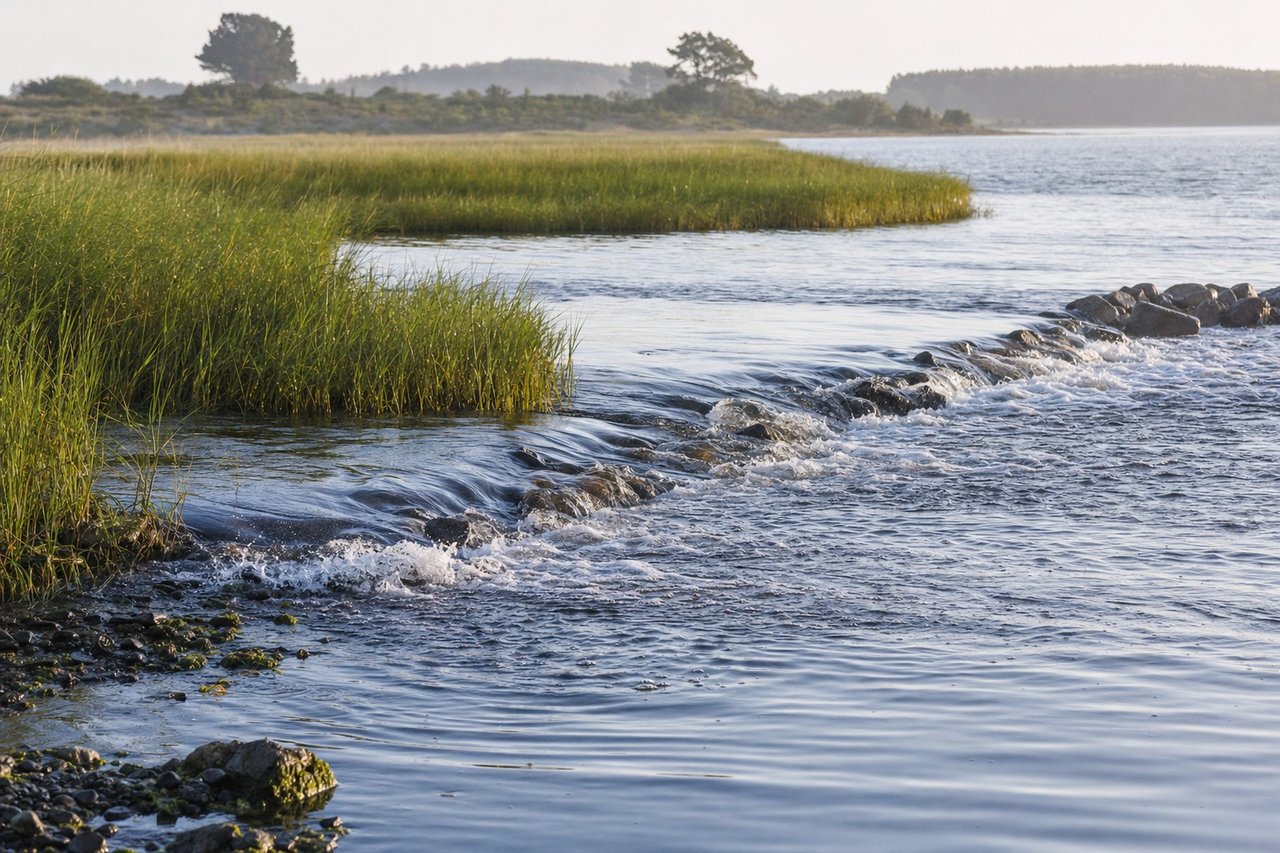
A living shoreline is not a compromise version of a seawall. It’s a different working theory of how a coast should meet the water, built from marsh grass, oyster reef, and restored dune vegetation instead of concrete. Where a seawall stops wave energy at a fixed line, a living shoreline spreads that energy out across a slope and lets the shore absorb it, the way an undeveloped coastline has always done.
This piece is a closer look at that approach specifically: what a living shoreline is actually made of, how it stacks up against hard armoring in plain terms, and the practical questions that come up once a property owner or a local government decides to build one.
What a Living Shoreline Is Made Of
The term covers a handful of components, usually combined rather than used alone. Marsh grass plantings, typically native species like smooth cordgrass along the US Atlantic and Gulf coasts, hold sediment in place with their root systems and slow the water passing over them. Oyster reef structures, sometimes built from bagged shell or purpose-cast concrete modules, act as a low breakwater while also growing into living habitat. Dune restoration adds native vegetation and sand fencing to rebuild a buffer that storms have stripped away. A gently graded slope ties the pieces together, giving waves room to lose energy gradually instead of hitting a vertical wall.
None of this is decorative landscaping bolted onto an engineering problem. Each element does mechanical work. Marsh stems physically reduce the speed of water moving through them, and that reduction is measurable, which is part of why coastal engineers treat vegetated shorelines as a legitimate erosion-control method rather than a soft add-on to a “real” solution.
Where the Line Gets Drawn
Not every restoration project counts as a living shoreline in the technical sense used by permitting authorities. A living shoreline specifically addresses erosion and wave energy at the water’s edge. A wetland restoration project further inland, or a dune project with no erosion-control function, gets categorized differently even though the plant palette can look similar.
Living Shorelines vs. Hard Armoring
Seawalls, bulkheads, and revetments solve one problem very directly: they stop water from crossing a specific line. That’s it. For a single high-value structure sitting close to an exposed, high-energy coast, that directness is genuinely useful, sometimes the only workable option.
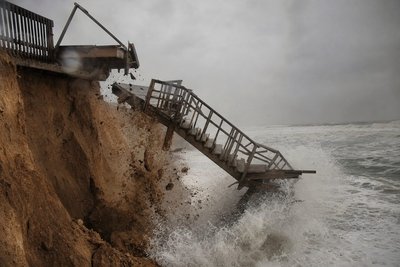
The cost of that directness shows up elsewhere. A hard structure reflects wave energy rather than absorbing it, and that reflected energy scours sediment away at the base of the wall and at its ends. The US Army Corps of Engineers has documented this pattern for decades: a seawall protects the property behind it while often accelerating erosion on the neighboring, unprotected stretch of coast. The intertidal habitat that used to sit at that same waterline, the shallow water where juvenile fish and shellfish shelter, disappears under the wall entirely.
Living shorelines trade some of that certainty for a different set of advantages. Because they absorb rather than reflect, they don’t create the same downdrift erosion problem for the neighbor. Because they’re built from living material, they can accrete sediment and gain elevation as sea levels rise, something a fixed concrete line cannot do by definition. And because the intertidal zone stays intact, the habitat and water-quality functions of that stretch of coast keep working.
Here’s the trade-off, stated plainly rather than hedged: living shorelines generally handle everyday wave action and moderate storms very well, and the evidence for sheltered and moderately exposed coastlines increasingly favors them over hard armoring. But on a coast that takes the full force of open-ocean swell or a direct hurricane track, a mature marsh planting cannot dissipate wave energy as reliably as a properly engineered hard structure. Anyone claiming a living shoreline is simply better in all conditions is skipping past that limit.
The Ecological Side of the Ledger
Erosion control is the headline reason to build a living shoreline, but it isn’t the only return. Marsh grass and oyster reef create structured, shallow-water habitat that a vertical wall never will. Juvenile fish, crabs, and a range of shellfish species use that intertidal zone as nursery habitat, and its loss under decades of shoreline hardening is one reason some coastal fisheries have struggled even where water quality itself hasn’t collapsed.
The marsh vegetation also does quiet water-treatment work. Runoff crossing a planted buffer loses sediment and takes up nutrients before it reaches open water, functioning as a low-cost filter that a hardened shoreline doesn’t provide at all. Coastal wetlands additionally hold carbon in their soils, often called “blue carbon,” at rates that have drawn growing attention from researchers and from programs within NOAA’s Office for Coastal Management specifically because of how much carbon a healthy marsh can lock away relative to its footprint.
None of that shows up on a construction invoice. It shows up later. Fish counts, water-quality monitoring, and, less directly, a coastline’s broader resilience to the next storm all carry the trace of it.
Permitting, Maintenance, and Realistic Costs
Permitting rules vary by state and country, so treat anything specific here as a starting point rather than the final word for your site. In the US, several state coastal management programs have shifted toward favoring living shorelines over new hard structures on sheltered or moderately exposed shores, in some cases routing them through a streamlined general permit while a comparable seawall application faces heavier review. Maryland’s Living Shoreline Protection Act framework is one of the clearer examples of a state formally building that preference into its tidal wetlands permitting. This isn’t universal, though, and a highly exposed site can still end up needing a hard structure regardless of the local policy’s general preference.
Maintenance differs in kind rather than simply in amount. A seawall needs periodic structural repair once scour or storm damage compromises its base or joints, and that repair tends to be expensive because it’s specialized construction work. A living shoreline needs closer attention early on, generally through the first two or three growing seasons while marsh grass and dune plants establish root systems, then settles into something closer to self-maintaining. A storm can strip vegetation from a young planting. A mature one usually recovers on its own.
Cost comparisons get thrown around loosely, so it’s worth being careful here. Living shoreline projects are often, but not always, cheaper to build per linear foot than a comparable engineered hard structure, and their long-term repair costs tend to run lower since they aren’t fighting the same scour dynamics. That gap narrows or disappears on sites that need substantial imported fill, a large sill or reef component, or an unusually long permitting process. Get a site-specific estimate rather than assuming either approach is automatically the cheaper one.
When a Hybrid Approach Makes More Sense
Pure living shorelines and pure hard structures aren’t the only two options, and a lot of real projects land somewhere between them. A hybrid design pairs a modest structural element, an oyster reef breakwater, a rock sill, or a bagged-shell ridge, with marsh grass planted behind it. The structure absorbs the sharpest wave energy immediately, before the vegetation has had time to establish, giving the marsh a calmer environment to root into over its first few seasons.
This matters most on shorelines that sit in the middle of the exposure spectrum: too much wave energy for an unassisted planting to survive its early growing seasons, but not so much that only a full seawall will hold. A stretch of shoreline facing a wide tidal creek, a moderately exposed bay, or a site downdrift of an existing hardened structure often fits that description. The hybrid buys the marsh time to grow into a shoreline that would otherwise wash out before it had a chance to establish.
New York City’s Living Breakwaters project off Staten Island is a large-scale version of the same idea. Built after Hurricane Sandy with Rebuild by Design and state funding, it places a string of partially submerged breakwater structures offshore, seeded with oyster habitat, to reduce wave energy reaching the shore while rebuilding a reef ecosystem that the harbor had largely lost. It’s a bigger, more engineered undertaking than a homeowner’s shoreline planting, but it runs on the same underlying logic: knock down the wave energy with a structural or reef element first, then let habitat do sustained work behind it.
A Practical Starting Point
Anyone weighing this decision for an actual property is better served by a site visit from a coastal engineer or the relevant state coastal management program than by a general rule pulled from an article. Wave exposure, existing sediment supply, and what’s already built on the neighboring shoreline all shift the answer in ways that a satellite photo can’t fully capture. The US Army Corps of Engineers’ Engineering With Nature program keeps a running library of built projects, by region, for exactly this kind of side-by-side comparison before anyone pours concrete or plants a single stem of cordgrass.
Frequently Asked Questions
What exactly is a living shoreline?
+
A living shoreline is a shore-stabilization approach built from natural or nature-mimicking materials instead of a solid wall. The typical toolkit includes marsh grass plantings, oyster reef breakwaters, restored dune vegetation, and gently graded sediment, sometimes backed by a low rock or shell sill for extra structure. Instead of blocking wave energy at a hard line, the shoreline absorbs it across a slope and traps new sediment as it does.
How is a living shoreline different from a seawall or bulkhead?
+
A seawall or bulkhead is a fixed vertical structure, usually concrete, steel, or timber, that reflects wave energy back toward the water. A living shoreline is a sloped, vegetated system that absorbs wave energy and can gain elevation over time as sediment builds up against the plantings. One holds a line; the other moves with the water to some degree, which is also why the two perform differently as sea levels rise.
Are living shorelines cheaper than hard structures like seawalls?
+
Often, yes, but not universally. Living shoreline projects frequently cost less per linear foot to install than an engineered seawall or revetment of comparable length, and they tend to need less ongoing repair since they aren't fighting wave-driven scour the way a rigid wall does. Site conditions change this math substantially: a project needing a lot of imported sand fill, a large sill structure, or extensive permitting review can close the cost gap or erase it.
Do living shorelines need more maintenance than a seawall?
+
The maintenance is different in kind, not necessarily greater in total. A seawall needs periodic structural repair as scour undermines its base or joints fail. A living shoreline needs some early monitoring and occasional replanting while the marsh grass and dune vegetation establish themselves, typically in the first two to three growing seasons, after which a healthy planting is largely self-sustaining and can even repair itself after a storm strips some of the vegetation.
Is it harder to get a permit for a living shoreline than for a seawall?
+
It depends heavily on the jurisdiction, but the trend in several US coastal states runs the other way. A number of state coastal management programs have adopted a formal or de facto preference for living shorelines over new hard structures on sheltered or moderately exposed shorelines, sometimes routing them through a faster general permit while a comparable seawall proposal draws more scrutiny. Always confirm the current rule with the specific state or local coastal authority, since this varies and changes.
Do living shorelines actually work during a major storm?
+
They perform well under everyday wave action and moderate storms, where the vegetation and any reef or sill structure absorb energy and the marsh can recover afterward. In genuinely high-energy conditions, an exposed coast facing a direct hurricane track or heavy open-ocean swell, a mature living shoreline generally cannot dissipate wave force as reliably as a well-engineered hard structure, and this is the honest trade-off rather than a case for picking one approach everywhere.
What ecological benefits does a living shoreline provide beyond erosion control?
+
The intertidal habitat a living shoreline preserves or creates supports juvenile fish, crabs, and shellfish that need shallow, vegetated water to shelter in, which a vertical seawall simply doesn't offer. Marsh vegetation also filters runoff before it reaches open water, trapping sediment and taking up excess nutrients, and coastal wetlands sequester carbon in their soils at rates that have drawn increasing research interest from groups like NOAA's Office for Coastal Management.
What is a hybrid living shoreline?
+
A hybrid living shoreline pairs a low structural element, usually an oyster reef breakwater, a rock sill, or a bagged-shell ridge, with marsh grass planted behind it. The structure knocks down the worst of the incoming wave energy so the marsh has a calmer environment to establish in, which makes hybrids a common choice on shorelines too exposed for an unassisted planting but not so exposed that only a full seawall will hold.
Does a living shoreline work on any type of coastline?
+
No, and matching the approach to the site matters more than any general rule of thumb. Living shorelines suit low-energy to moderately exposed shores with a gentle slope and enough room for a planted buffer to establish. A narrow lot with almost no upland space, or a shoreline facing sustained open-ocean wave energy, is a poor candidate for an unassisted planting and usually needs either a hybrid design or a hard structure instead.
How long does it take for a living shoreline to become effective?
+
Marsh grass plantings generally need one to three growing seasons to root deeply enough to hold sediment reliably against normal wave action, and oyster reef elements can take a similar span to build up live coverage. A hybrid design with a sill or reef structure provides some erosion control from the day it's built, since the structural piece works immediately while the vegetation behind it matures.
Who runs living shoreline programs and permitting in the US?
+
NOAA's Office for Coastal Management and NOAA Restoration Center both maintain living shoreline guidance and have funded restoration projects around the country, and the US Army Corps of Engineers' Engineering With Nature initiative develops and documents nature-based approaches for exactly this kind of shore stabilization. Actual permitting authority sits with state coastal zone management programs and, for tidal wetlands specifically, state-level programs such as Maryland's Living Shoreline Protection Act framework.
Can I convert an existing seawall into a living shoreline?
+
In some cases, yes, usually by adding a marsh planting or reef structure in front of the existing wall rather than removing it outright, which softens wave impact and reintroduces habitat without giving up the wall's protection entirely. Full removal and replacement with an unassisted living shoreline is less common and depends on how exposed the site is and what the local permitting authority will approve.