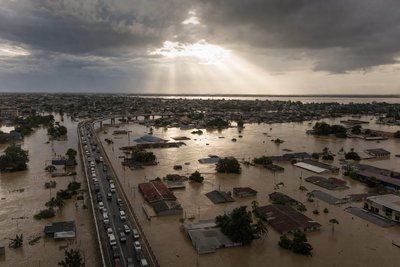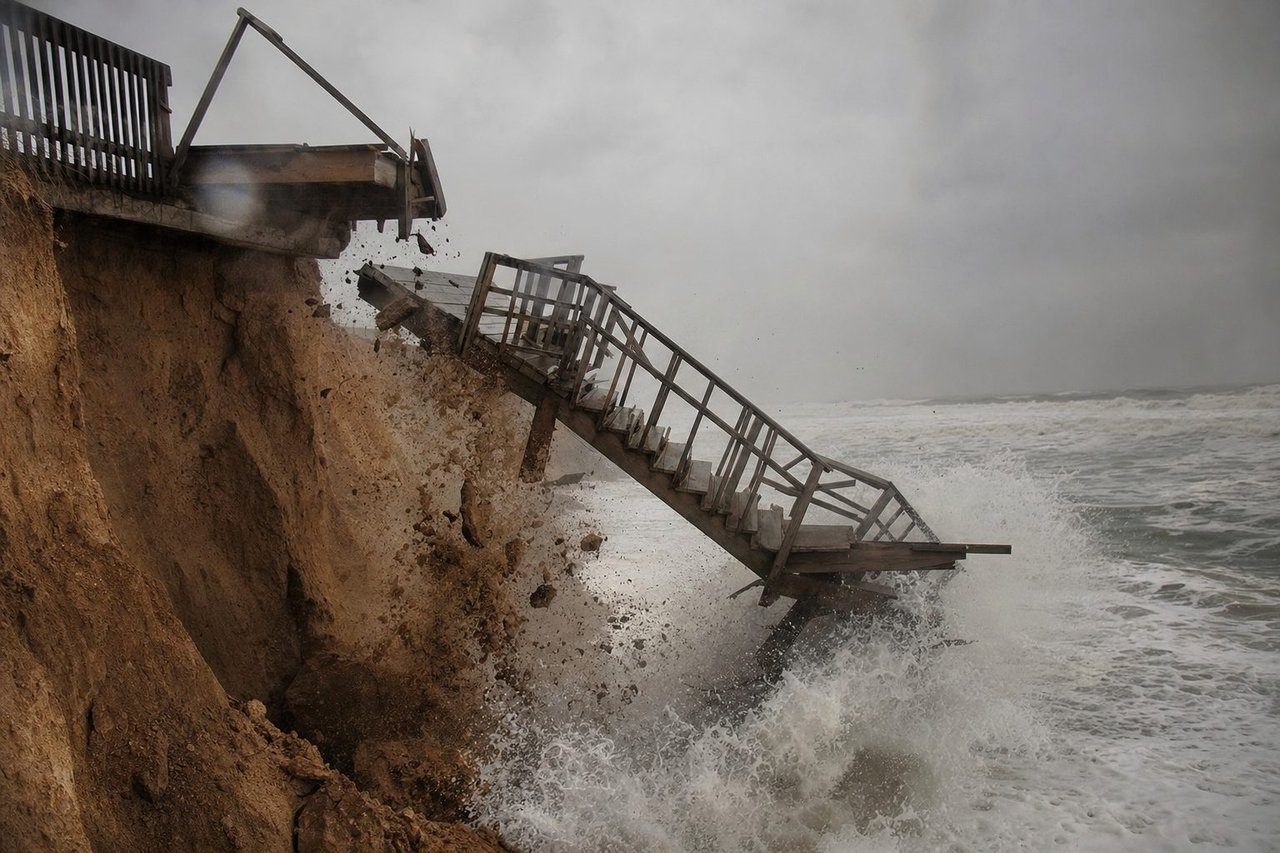
Coastal erosion strips a shoreline of sand, sediment, or rock a little at a time, and then, during a single storm, a lot at once. A dune can hold its shape for a decade and lose ten metres of it over one bad weekend. People living along the US Outer Banks have watched this exact pattern for generations: quiet retreat, then a sudden reckoning once a hurricane makes landfall.
Coastal erosion causes vary by shoreline, and not every coastline erodes at the same pace. That gap is the most useful thing to understand before deciding how to respond to it. A granite headland in Cornwall might lose centimetres in a year. A soft clay cliff on England’s Holderness coast can lose more than a metre in the same period. The difference comes down to what the shoreline is made of, how much wave energy reaches it, and whether something built upstream has already disrupted the sediment that would otherwise be replenishing it.
This article covers coastal erosion causes (the physical forces that drive it and why the rate varies so much from beach to beach), what’s genuinely at risk when a shoreline retreats, and how hard engineering compares with the nature-based alternatives increasingly replacing it.
What Causes Coastal Erosion: The Physical Forces at Work
Four things drive most coastal erosion, and they rarely act alone. Wave action does the constant, grinding work: every wave that breaks against a shore carries kinetic energy, and over years that energy pulverizes rock and drags sand back out to sea. Storm waves cause disproportionate damage compared with routine swell because their energy is concentrated and their runup reaches higher on the beach face than an ordinary tide ever would.
Longshore drift moves sediment sideways along a coast, powered by waves that arrive at an angle instead of head-on. Sand picked up at one end of a beach gets deposited further along the coast, which is why a beach can lose sediment on one side while gaining it on the other. Nothing is really destroyed in this process, it just relocates. Interrupt that movement with a structure, though, and the beach downstream of it starves.
Storm surge and sea-level rise both raise the water level that waves ride in on, letting erosion reach further inland than it otherwise would. NOAA’s Office for Coastal Management has tracked measurable sea-level rise along most of the US coastline for decades, and even a modest rise in mean sea level shifts where the highest waves make contact with land.
The Human Factor
Then there’s the part people build on purpose. Seawalls, groins, and jetties protect one stretch of coast, and they usually do exactly that for the property directly behind them. What they also do is reflect wave energy rather than absorb it, which increases scour at the base of the structure and at its ends. The US Army Corps of Engineers has documented this “terminal groin effect” for decades: erosion accelerates just past the end of a hardened structure, because the sediment that would have drifted there is now trapped upstream instead. Dredging shipping channels does something similar, pulling sand out of a system that would otherwise be nourishing nearby beaches.
Why Some Coastlines Erode Faster Than Others
Sediment type matters more than almost anything else here. Sandy beaches are loose and mobile by nature; they shift with every tide and rebuild themselves given calm weather and a healthy sediment supply. Bluffs and cliffs made of soft clay or glacial till, like much of England’s Holderness coast, don’t rebuild at all. Once that material is gone, it’s gone, and the coastline behind it simply moves inland. Holderness has long been documented as facing some of the fastest coastal erosion in Europe, with its softer clay sections retreating, on average, on the order of a metre or more a year.
Rocky headlands sit at the opposite end of the spectrum, eroding on a timescale measured in centuries rather than seasons.
Exposure and What Happened Upstream
Wave exposure, or fetch (the distance of open water a wave can build energy over before hitting shore), decides how much force a coastline actually absorbs. A beach tucked inside a bay sees smaller, gentler waves than an exposed headland facing thousands of miles of open ocean. The Outer Banks face the Atlantic directly, with no offshore landmass to blunt storm waves before they arrive, which is a large part of why the barrier islands there have needed repeated, expensive intervention over the decades.
The last variable is whether a neighboring stretch of coast has already been hardened. A seawall built two properties over changes the sediment budget for everyone downdrift of it, sometimes for miles. This is the part that gets left out of most homeowner decisions. Build a wall to protect your own frontage, and you may be quietly setting up the erosion problem your neighbor deals with in five years.
The Real Risks When a Shoreline Retreats
The property losses get the headlines, understandably. A house that was fifty metres from the bluff edge in 1995 and eight metres from it today is a visible, personal disaster, and the financial hit is immediate and specific. But the fuller risk list runs longer than lost real estate, and it accumulates more quietly.
Roads and buried utility lines assume the ground under them stays put, and it doesn’t always. Undermined roads crack and slump. Water and sewer lines near a retreating bluff edge can rupture without warning. On the Outer Banks, sections of NC Highway 12 have needed repeated repair and relocation as the barrier island beneath them narrows year over year.
Ecosystems absorb a great deal of this before anyone notices. Dunes and coastal wetlands act as a buffer, taking the brunt of storm surge and slowing erosion for whatever sits behind them, and once they’re gone the next storm hits harder and further inland than it would have otherwise. Louisiana’s coastal wetlands have been vanishing for decades from a mix of subsidence, sea-level rise, and infrastructure that cut off the sediment the delta needs to keep rebuilding itself. Losing that buffer doesn’t just harm wildlife. It removes the thing that was quietly protecting the property and infrastructure behind it.
Adaptation Strategies: Hard Engineering vs. Living Shorelines
Coastal erosion adaptation strategies split into one of two broad tool kits, and the two solve the problem in genuinely different ways.
Hard engineering, meaning seawalls, revetments, and groins, works by resisting wave energy directly. A concrete seawall stops water from crossing a specific line, full stop, and for a single high-value property on an exposed, high-energy coast, that can be the only realistic option. The trade-off is real. Reflected wave energy erodes the sand in front of the wall over time, so plenty of seawalls end up standing in front of a beach that has quietly disappeared, and the erosion problem simply relocates to whatever stretch of coast isn’t protected.
Living shorelines take the opposite approach: marsh grass, oyster reefs, dune vegetation, and gently sloped sediment absorb wave energy instead of reflecting it, and trap new sediment rather than starving the beach of it. Restored wetlands and dune systems can accrete over time, gaining elevation as sea levels rise, which a rigid wall structurally cannot do.
For sheltered or moderate-energy coastlines, the evidence increasingly favors living shorelines, and at this point it isn’t really a close call. Virginia’s state law has required a preference for living shorelines over hardened structures in tidal shoreline permitting since 2011, precisely because the ecological and long-term erosion outcomes for that kind of coast are better documented and generally superior. Hard armoring still earns its place on highly exposed, high-energy coastlines where wave force is too large for a planted marsh to survive, but reaching for a seawall as the default answer on the kind of gently sloped, moderately exposed shoreline most coastal homeowners actually live on is usually the wrong first instinct.
What a Coastal Property Owner Can Actually Do
If you live near a retreating shoreline, the useful moves are less dramatic than either “build a wall” or “sell now and move inland.”
Start with your local coastal management authority, not a contractor. In the US that typically means the state coastal zone management office operating under the framework NOAA’s Office for Coastal Management administers; in the UK, it’s the relevant Shoreline Management Plan authority. These bodies already hold erosion-rate data for your specific stretch of coast, and permitting for any hardening or living-shoreline project usually runs through them regardless of what you’d prefer to build. One genuine surprise for a lot of homeowners: some of these authorities now have a formal permitting preference for living shorelines and will push back on a straightforward seawall application, a real reversal from how approvals worked twenty years ago.
Check your insurance before assuming it protects you. Standard homeowners policies in the US generally exclude gradual erosion and earth movement, and flood insurance through the National Flood Insurance Program covers flood damage, not land lost to a retreating shoreline. That gap surprises people at the worst possible moment.
Keep your expectations realistic about what engineering can promise, too. No structure, hard or living, stops erosion permanently; the honest framing most coastal engineers use is that these interventions buy time and shift risk rather than eliminate it. Cape Hatteras Lighthouse is the clearest example of that honesty in practice. Rather than fight the erosion with an ever-larger seawall, the National Park Service moved the entire 4,800-tonne structure roughly 870 metres inland in 1999, betting on relocation over a permanent defense that never really existed in the first place.
None of this changes the underlying coastal erosion causes: sediment supply, wave energy, and disrupted longshore drift keep driving the retreat regardless of what gets built on top of it. That’s why the more durable adaptation strategies work with those forces instead of against them, and why the choice between hard engineering and living shorelines is really a choice about which coastal erosion adaptation strategies fit your specific stretch of coast rather than a universal answer.
Frequently Asked Questions
What is coastal erosion?
+
Coastal erosion is the gradual loss of sand, sediment, or rock along a shoreline as waves, currents, tides, and wind wear it away and carry the material elsewhere. It happens on every coastline to some degree, but the rate varies enormously depending on what the shore is made of and how exposed it is to wave energy. Left unmanaged, it moves the shoreline inland over months, years, or decades.
What causes coastal erosion?
+
The main drivers are wave action, longshore drift moving sediment along the coast, storm surge, and sea-level rise, all of which erode or displace material faster than it's replaced. Human structures like seawalls, groins, and dredged channels often make things worse nearby by blocking the natural flow of sediment. Most eroding coastlines are dealing with several of these factors layered on top of each other.
Why does coastal erosion happen faster in some places than others?
+
Sediment type is the biggest factor: soft clay bluffs and glacial till erode far faster than sandy beaches, which at least have a chance to rebuild themselves, or rocky headlands, which barely move within a human lifetime. Wave exposure matters too: an open coast facing thousands of miles of ocean takes far more energy than a sheltered bay. Whether a neighboring stretch of coast has already been hardened with a seawall also changes how much sediment reaches you.
How fast does coastal erosion typically occur?
+
It varies by an order of magnitude or more from one coastline to the next. Some of Europe's softer clay coastlines, like England's Holderness coast, have long retreated at roughly a metre or more per year on average, while rocky coastlines erode on a scale of centimetres per century. Storms can compress years of gradual retreat into a single event.
What's the difference between a seawall and a living shoreline?
+
A seawall is a hard, fixed structure, usually concrete or stone, that blocks wave energy by reflecting it back toward the sea. A living shoreline uses marsh grass, oyster reefs, dune vegetation, and gently sloped sediment to absorb wave energy and trap new sediment instead. One resists the water directly; the other works with it.
Are living shorelines actually more effective than seawalls against coastal erosion?
+
For sheltered and moderate-energy coastlines, yes. The evidence generally favors them, since they can accrete and gain elevation as sea levels rise, something a rigid wall cannot do, and they avoid the scour and downdrift starvation that hardened structures often cause. Virginia has required a legal preference for living shorelines over seawalls in tidal permitting since 2011 for exactly this reason. Hard armoring still makes sense on highly exposed, high-energy coasts where a planted marsh can't survive the wave force.
Does homeowners insurance cover coastal erosion damage?
+
Usually not. Standard homeowners policies in the US typically exclude gradual erosion and earth movement, and flood insurance through the National Flood Insurance Program covers water damage, not land lost to a retreating shoreline. Property owners near an eroding coast often discover this gap only after damage has already occurred.
How much does building a living shoreline cost compared to a seawall?
+
Costs vary widely by site and scale, but living shoreline projects are frequently cheaper to install than a comparable seawall and tend to carry lower long-term maintenance costs, since they don't need periodic repair against wave-driven scour the way hard structures do. Permitting costs and timelines can differ too, depending on the local coastal authority's requirements.
Can a seawall make erosion worse on a neighboring property?
+
Yes. Seawalls reflect wave energy rather than absorbing it, which increases scour at the base and ends of the structure, and they interrupt the longshore drift of sediment that would otherwise replenish beaches further along the coast. This is sometimes called the terminal groin effect, and it's well documented by coastal engineers, including the US Army Corps of Engineers.
Does coastal erosion affect property value?
+
Yes, often significantly, and well before the land is actually lost. Properties on a documented erosion-risk stretch of coast can face higher insurance costs, mortgage and resale complications, and buyer hesitancy, even if the physical retreat is still years away. Local erosion-rate data from a coastal management authority is often the first thing a cautious buyer or lender will ask to see.
Is coastal erosion getting worse because of sea-level rise?
+
In most places, yes. Rising mean sea levels let waves reach further inland and hit the shoreline with more force during storms, and NOAA's Office for Coastal Management has tracked measurable sea-level rise along most of the US coastline for decades. It's rarely the only factor, but it compounds most of the others.
Who manages coastal erosion policy and permitting?
+
In the US, this generally runs through state coastal zone management programs operating under the framework NOAA's Office for Coastal Management administers. In the UK, Shoreline Management Plans set the policy for specific stretches of coast. Either way, any erosion-control project, hard or nature-based, typically needs permitting through that authority before it can be built.