Most renters assume their insurance already handles whatever water damage might hit their apartment. It doesn’t. The gap between what people assume and what the policy actually says is where a lot of denied claims come from, and it tends to surface at the worst possible moment. Renters insurance flood coverage is not part of a standard policy. It has to be added on purpose, and most renters never find that out until the week they need it.
The confusion is understandable. A renters policy does cover plenty of water-related losses: a burst pipe, an overflowing washing machine, a bathtub left running by accident. What it excludes, by design and by name in the policy language, is flood. Rising water from outside the building, storm surge, groundwater working its way up through a foundation, none of that falls under the water-damage coverage a standard policy provides.
This piece walks through where that line actually sits, why insurers draw it the way they do, and what a renter has to do to close the gap if their unit is exposed enough to justify it.
What a Standard Renters Policy Covers When Water Gets In
Renters insurance is built around named perils, and water damage is one of them, but only in a specific form. The event has to be sudden and accidental, and the source has to be internal to the property rather than an external body of water rising into it.
Covered: Sudden, Accidental Discharge
A supply line that bursts behind a wall, a dishwasher hose that fails mid-cycle, a toilet that overflows because of a clog nobody noticed in time. These are the textbook examples of covered water damage, and they share two traits: the water came from a fixture or appliance inside the unit, and the event happened quickly enough to count as sudden rather than gradual. An insurer investigating a claim like this is checking for exactly those two things before anything else.
Slow leaks sit in a grayer zone. A pipe that’s been dripping behind a cabinet for six months, causing mold and warped flooring, often gets treated differently than a pipe that bursts outright, because insurers generally expect a tenant to notice and report ongoing damage rather than let it accumulate. Reading the specific maintenance and reporting language in a policy matters more here than most renters realize.
Not Covered: Flood, Storm Surge, Groundwater
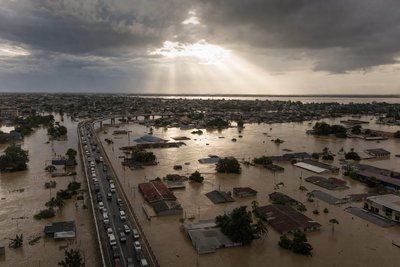
Flood is defined narrowly and consistently across the industry: water from an external source, rising rather than discharged, whether that’s an overflowing river, a storm surge pushing seawater inland, heavy rainfall overwhelming a city’s storm drains, or groundwater seeping upward through a foundation after the water table rises. None of it is covered by a standard renters policy. The exclusion is written in plainly, not buried in fine print anyone would need a lawyer to parse.
The line can look arbitrary from a tenant’s living room floor. Water is water once it’s soaking into the carpet. But insurers price and underwrite these two categories completely separately, because the risk profiles differ enormously: a burst pipe is a random, individually rare event; a flood is a correlated catastrophe that can hit every unit on a block at once. That difference in risk is the entire reason the coverage gap exists.
Why the Gap Catches So Many Renters Off Guard
Nobody reads an exclusions section for fun. Most renters buy the cheapest policy that satisfies a lease requirement, glance at the coverage limit, and move on. The flood exclusion sits several pages in, phrased in the same flat legal language as every other clause, with nothing about its formatting to signal how consequential it actually is.
The mismatch becomes obvious only after a loss. A tenant files a claim after a storm pushes water in under the front door, expects the adjuster to process it like any other water-damage claim, and instead gets a denial letter citing the flood exclusion by name. At that point, the exclusion that felt like boilerplate becomes the reason a security deposit’s worth of furniture doesn’t get replaced.
Hurricane Ida’s remnants in September 2021 made this painfully concrete in New York City, where flash flooding overwhelmed basement-level apartments faster than many residents realized was even possible from a storm that had already been downgraded well inland. It’s a widely reported example of exactly the risk profile ground-floor and basement renters carry, and it’s worth knowing about regardless of where someone rents.
How a Renter Actually Gets Flood Coverage
Closing the gap means buying a separate policy, and there are two real paths to doing it.
The National Flood Insurance Program, run through FEMA, sells contents-only policies aimed specifically at tenants. This coverage insures belongings, furniture, electronics, clothing, without touching the building structure, which stays the landlord’s or property owner’s responsibility under a separate policy. A renter buys it the same way they’d buy a base renters policy, directly or through an agent, and it’s available in any NFIP-participating community regardless of whether the renter’s base policy comes from the same carrier.
Private flood insurers cover much of the same ground now, and the market has expanded meaningfully since the Biggert-Waters Flood Insurance Reform Act of 2012 pushed some NFIP rates closer to their actuarial cost, opening room for private carriers such as Neptune Flood to compete on pricing in areas where NFIP coverage runs expensive. Some private policies bundle more easily with an existing renters policy than a separate NFIP purchase does, which is worth asking about directly.
Cost depends on the same variables that drive any flood premium: the property’s flood-zone designation, checkable on FEMA’s Flood Map Service Center, its location, and the coverage limit chosen. A contents-only policy is smaller than a full building policy, which keeps the premium lower than what a homeowner in the same zone would pay, but there’s no honest flat number to quote without an actual address.
The Landlord’s Policy Covers the Building. Not Your Belongings.
This is the misconception that does the most damage, and it deserves to be said plainly rather than softened. A landlord’s insurance policy protects the structure: walls, flooring, plumbing, the building’s own systems and common areas. It does not extend to anything a tenant owns, regardless of what caused the damage or how thorough the landlord’s coverage otherwise looks on paper.
That split holds even when it feels unfair. A tenant whose belongings are destroyed by water intrusion the landlord’s own maintenance failure arguably caused still generally has no claim against the landlord’s property policy for their own furniture and electronics; that’s a separate legal question about landlord negligence, handled outside of insurance, not something a standard property policy resolves. The building side and the belongings side are insured through entirely separate policies held by entirely separate parties, and no amount of landlord diligence changes that structure.
Who Should Actually Consider a Separate Flood Policy
Not every renter needs this. The decision comes down to exposure and what’s actually at stake if the worst happens.
Ground-floor and basement-unit tenants carry the clearest exposure, since water entering a building reaches the lowest units first and generally does the most damage there. Renters in or near a FEMA-designated Special Flood Hazard Area are a second obvious group, and checking that designation for a specific address takes a few minutes on FEMA’s map service. A third group is easy to overlook: renters whose belongings, added up, would actually hurt to replace out of pocket. That threshold is lower than most people assume once furniture, electronics and clothing get priced individually rather than treated as background stuff.
Someone renting a third-floor unit well outside any mapped flood zone, with modest belongings, has a much weaker case for the extra policy than someone in a basement unit two blocks from a river. The math is genuinely different between those two situations, and treating them the same wastes either money or protection.
Misconceptions Worth Correcting Directly
“My landlord’s insurance covers my stuff.” It doesn’t. That single assumption accounts for more post-flood financial surprise among renters than any other misunderstanding in this space.
“If it’s raining hard enough, that counts as covered water damage.” It doesn’t either. Heavy rain that overwhelms drainage and pushes water into a unit from outside is flood, by the industry’s own definition, regardless of how sudden or dramatic the event feels from inside the apartment.
“Renters insurance is renters insurance, I’m covered for whatever happens.” Coverage is defined by named perils and explicit exclusions, not by a general promise. Reading the actual exclusions list once, before anything happens, costs fifteen minutes. Finding out the hard way costs considerably more.
FEMA disaster assistance, where a formal declaration makes it available at all, is not a substitute either. It’s typically capped well below full replacement value for a household’s belongings, and part of it often comes structured as a loan rather than a grant. A renter counting on that safety net after a flood is usually counting on less than they think, and finding that out after the water has already receded is the worst possible time to learn it.
Frequently Asked Questions
Does renters insurance cover flood damage?
+
No. Standard renters insurance policies specifically exclude flood damage, along with damage from storm surge and groundwater seepage. Renters insurance flood coverage has to be purchased separately, either through an NFIP contents-only policy or a private flood endorsement. This exclusion is written into nearly every standard renters policy sold in the US, not a rare fine-print surprise limited to a few carriers.
What water damage does a standard renters policy cover?
+
Sudden, accidental water discharge: a pipe that bursts, a washing machine hose that fails, a bathtub someone forgot was running and left overflowing. These count as covered perils under most standard policies because the source is internal to the unit and the event is sudden rather than a rising body of water. Slow leaks that went unreported for months are a separate, often-excluded category worth checking in the policy language directly.
What's the actual difference between a flood and ordinary water damage for insurance purposes?
+
Insurers define flood narrowly: rising water from an external source, such as an overflowing river, storm surge, heavy rainfall overwhelming drainage, or groundwater seeping up from below. Water damage, by contrast, usually means water that originates inside the unit itself, from a fixture or appliance, and moves through the space suddenly rather than accumulating from outside. A denied claim after a storm almost always comes down to this line.
How does a renter actually get flood insurance?
+
Two paths exist. The National Flood Insurance Program sells contents-only policies to renters in participating communities, insuring belongings without touching the building structure. Private flood insurers, a market that has grown considerably since federal rate reforms pushed some NFIP pricing closer to actuarial cost, also write renter-accessible policies in many of the same areas. Neither comes bundled with a standard renters policy automatically.
Can renters buy an NFIP flood policy even though they don't own the building?
+
Yes. The NFIP explicitly offers contents-only coverage aimed at tenants, separate from the building coverage a landlord or property owner would carry. A renter buys it directly or through an insurance agent, the same way they'd buy their base renters policy, and it protects furniture, electronics and belongings rather than the structure itself.
How much does flood coverage cost for a renter?
+
It varies by flood-zone designation, location and coverage amount chosen, the same factors that drive homeowner flood premiums, just applied to a smaller contents-only policy. A unit in a FEMA-mapped Special Flood Hazard Area will generally cost more to insure than one outside it. There's no reliable flat number to quote here; an actual quote from the NFIP or a private carrier is the only way to know for a specific address.
Is there a waiting period before flood coverage takes effect?
+
Most NFIP policies carry a standard waiting period, commonly around 30 days, before coverage becomes active. That rules out buying a policy the week a storm is already in the forecast. Some private carriers structure this differently, and certain lender-driven exceptions exist, but the general rule is that flood coverage is a decision made ahead of time, not a reaction to an approaching system.
Does my landlord's insurance cover my belongings during a flood?
+
Generally, no. A landlord's policy is built to cover the building: structure, fixtures, common areas. It doesn't extend to a tenant's furniture, electronics or clothing regardless of the cause of loss, flood or otherwise. This is one of the most common assumptions renters carry into a lease, and it's wrong often enough to be worth stating plainly rather than gently.
Who's responsible for flood damage to the building itself, the landlord or the tenant?
+
The building structure is the landlord's or property owner's responsibility, typically insured under their own commercial or building-owner policy. Personal belongings inside the unit are the tenant's own responsibility, regardless of who owns the building or what that owner's policy actually covers. The split holds even in buildings where the landlord's coverage turns out to be thin or lapsed.
Which renters should seriously consider buying separate flood coverage?
+
Ground-floor and basement-unit tenants carry the most direct exposure, since water entering a building typically reaches those units first and worst. Anyone renting in or near a FEMA-designated Special Flood Hazard Area is a second clear candidate, checkable directly on FEMA's Flood Map Service Center. A third group: renters with belongings worth enough that replacing them out of pocket would actually hurt, which is a lower bar than most people assume.
Does FEMA disaster assistance cover what flood insurance would have covered?
+
Not reliably. Federal disaster assistance is typically capped at a few thousand dollars per household in the most common grant categories, often structured partly as a low-interest loan rather than a grant, and it only becomes available after a formal disaster declaration for that specific event. A flood insurance policy doesn't depend on a declaration and doesn't come with those caps in the same way.
What happens if a renter's belongings are destroyed by a flood and they have no flood coverage?
+
The renter absorbs the loss directly. The base renters policy won't pay out because flood is excluded by name, the landlord's policy doesn't cover tenant belongings under any circumstance, and disaster assistance, where it applies at all, rarely comes close to full replacement value. This is the actual financial exposure the coverage gap creates, and it's why the decision is worth making before water is already in the building.